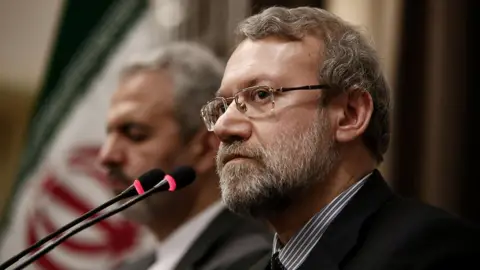
The Israeli air strike which killed Iran's security chief, Ali Larijani, has removed one of the Islamic Republic's most experienced and influential policymakers at a critical moment.
Lariijani was not a military commander, but he was a central figure in shaping Iran's strategic decisions. As secretary of the Supreme National Security Council, he sat at the heart of decision-making on war, diplomacy, and national security.
His voice carried weight across the system, particularly in managing Iran's confrontation with the United States and Israel. Following the killing of Supreme Leader Ali Khamenei on February 28, Larijani conveyed a defiant stance, indicating Iran was prepared for a prolonged conflict.
His death comes amid a broader campaign in which several senior Iranian officials and commanders have been killed within a matter of weeks, suggesting a concerted effort to destabilize Iran's leadership during wartime.
Despite his hardline stance against the West, Larijani was often described as a pragmatist, balancing ideological loyalty with a technocratic approach, advocating for a calculated strategy over mere rhetoric.
At the time of his death, Larijani was grappling with several crises: the ongoing war, a wave of domestic unrest, and stalled negotiations concerning Iran's nuclear program. The challenges he faced are now inherited by an uncertain successor.
The implications of Larijani's assassination not only deepen Iran's leadership crisis but also raise concerns about the nation's stability and the potential for escalated conflict in the region.