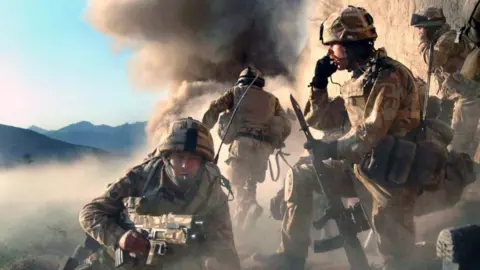
Blast walls, rocket attacks, Forward Operating Bases (FOBs), Improvised Explosive Devices (IEDs)... and long queues in the canteen. Anyone who deployed to Afghanistan, in whatever role, between 2001-2021 will have their own vivid memories of that time.
It started with the flight in – to Kandahar, Kabul or Camp Bastion. It could be a long, slow descent with the lights out on an RAF jet, or a rapid, corkscrew down in a C-130 transport plane. In both cases, the aim was to avoid being blown out of the air by a Taliban surface-to-air missile.
Over the course of 20 years, thousands of servicemen and women, as well as civilians, from dozens of countries deployed to Afghanistan, answering the US call for assistance.
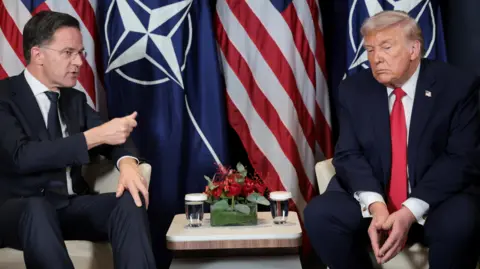
This call came in the form of invoking Nato's Article 5 of its charter – the only time it has ever happened in Nato's 77-year history – which states that an attack on one member shall be deemed an attack on all.
America was reeling from the devastating 9/11 attacks when al-Qaeda, which was being sheltered by the Taliban in Afghanistan, murdered nearly 3,000 people by flying packed airliners into New York's Twin Towers and the Pentagon in Washington.
The Taliban were swiftly driven from power in a joint effort by the US military, the CIA, and Afghanistan's Northern Alliance. Then it was all about trying to hunt down the remnants of al-Qaeda as Britain's Royal Marines, together with UK Special Forces, pursued them over the mountains while many evaded capture and regrouped in Pakistan.
As combat operations continued, the landscape of the Afghan conflict became increasingly complex. It was not just Americans who were risking life and limb; troops from various nations, including Brits, Canadians, Danes, and Estonians, stood on the front lines.
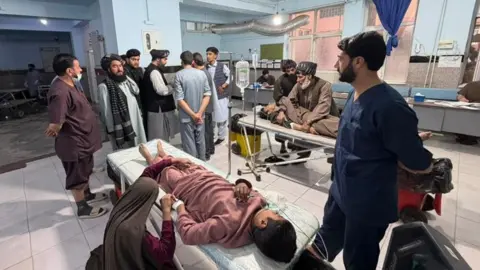
While attempting to navigate the region, soldiers faced many dangers, including the often-hidden and expertly concealed IEDs planted along crucial pathways. These incidents, resulting in injuries and loss of life, were a stark reminder of the risks faced during service.
As the years unfolded, the narratives of courage and sacrifice blended into a shared experience—one that included not only the international forces but also the countless Afghan nationals who joined the fight.
Today, the outrage over the perception that some troops avoided the fiercest fighting underscores the deeper reality of the sacrifices made by all who answered America's call for help in the wake of the attacks.