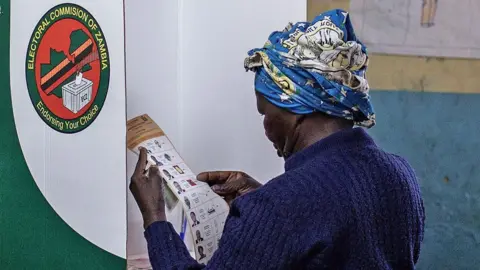
A senior Zambian government official has stated that some political parties are soliciting sexual favors from prospective female candidates seeking to be nominated ahead of the upcoming August general election.
I am going to appeal to all female aspiring candidates to ensure that they record all these cases, Mainga Kabika, the head of the gender office in the presidency, declared at a recent meeting.
She did not disclose the specific political parties implicated.
Zambia exhibits a significant gender imbalance in its political sphere, with only about 15% of Members of Parliament being women. The under-representation is attributed to deep-rooted cultural and structural barriers, as noted in a statement from the president's office last year.
Kabika addressed state prosecutors and confirmed that many women had contacted her regarding the problematic requests they were receiving: I can confirm to you that I am receiving a lot of messages; some are already on record... they are being asked for sexual favors in exchange for adoption [as candidates], which is unacceptable, she explained.
This troubling trend, termed sextortion, may deter many women from actively participating in politics, as noted by Beauty Katebe, chair of the Non-Governmental Gender Organisations Coordinating Council. She emphasized the importance of reporting these incidents, despite the social stigma and cultural biases that hinder women from coming forward.
Katebe advocated for establishing a fast-track court system to expedite these cases and stressed the necessity of imposing stricter laws to prevent sexual harassment of women. If they were exposed, they would definitely stop, she added, referencing the alleged offenders.
Despite some high-profile female appointments in politics, including Vice-President Mutale Nalumango, there is still significant room for improvement. The president's office reported that only 28% of civil service directors are women and merely five out of 36 CEOs of state-owned enterprises are female.
With Zambia's general election scheduled for August 13, voters will choose a president, Members of Parliament, councilors, and council chairs, amid these critical discussions about gender equality in politics.