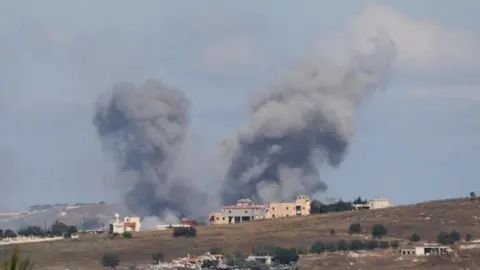
An Orthodox Easter truce agreed by Russia and Ukraine came into force on Saturday afternoon but 38 minutes later we heard air raid sirens in Kharkiv region, northeastern Ukraine. Since then, officials and military have recorded multiple ceasefire violations along the frontline, although no long-range missile or drone strikes.
The pause in fighting is supposed to last until Easter Monday to give people a much-needed rest, more than four years after Russia launched its full-scale invasion. Easter should be a time of safety, a time of peace, Ukraine's President Volodymyr Zelensky wrote on X, warning that Ukrainian forces would respond strictly in kind to any actions by Moscow. Expectations and trust are very low here.
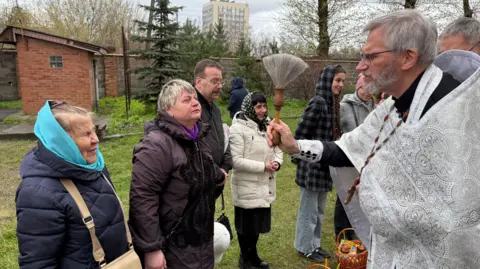
Shortly before the 16:00 (14:00 BST) start time for the truce, families brought baskets full of iced Easter cakes, painted eggs and sausage to St John the Theologian Church for a blessing. They formed a line around the building to be doused with holy water by the parish priest.
St John's church itself was damaged at the start of the full-scale war and its windows on one side are still boarded up. Do you believe them? Fr Viktor wanted to know, when I asked about the significance of a Russian ceasefire.
In the meantime, those on rotation have been dropping Easter cake and alcohol-free wine to their friends at the front by drone. But the peace process, launched by the US, has since stalled, and Ukraine is still pushing for strong security guarantees from its allies. We need real peace talks, says drone commander Heorhiy.
As the truce progresses, Ukrainians remain cautious, longing for genuine peace, as the trauma from previous ceasefires haunts their collective memory.
The pause in fighting is supposed to last until Easter Monday to give people a much-needed rest, more than four years after Russia launched its full-scale invasion. Easter should be a time of safety, a time of peace, Ukraine's President Volodymyr Zelensky wrote on X, warning that Ukrainian forces would respond strictly in kind to any actions by Moscow. Expectations and trust are very low here.
Shortly before the 16:00 (14:00 BST) start time for the truce, families brought baskets full of iced Easter cakes, painted eggs and sausage to St John the Theologian Church for a blessing. They formed a line around the building to be doused with holy water by the parish priest.
St John's church itself was damaged at the start of the full-scale war and its windows on one side are still boarded up. Do you believe them? Fr Viktor wanted to know, when I asked about the significance of a Russian ceasefire.
In the meantime, those on rotation have been dropping Easter cake and alcohol-free wine to their friends at the front by drone. But the peace process, launched by the US, has since stalled, and Ukraine is still pushing for strong security guarantees from its allies. We need real peace talks, says drone commander Heorhiy.
As the truce progresses, Ukrainians remain cautious, longing for genuine peace, as the trauma from previous ceasefires haunts their collective memory.