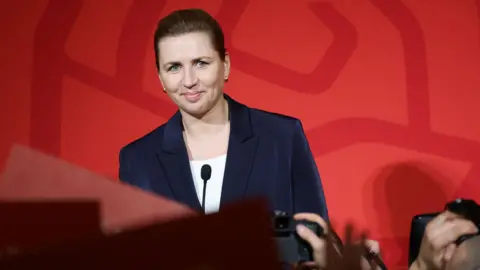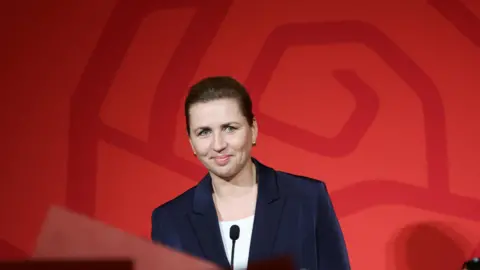
Led by Prime Minister Mette Frederiksen, Denmark's Social Democrats have won the most votes in the country's general election, but faced their weakest performance in over a century, failing to secure a majority.
Taking 21.9% of the vote, the Social Democrats finished first in Tuesday's general election with 38 parliamentary seats, making them the largest party, yet not enough for a standalone victory.
Inside Denmark's parliament, Christiansborg, Social Democratic supporters cheered as Frederiksen expressed her disappointment over the election outcome. I'm sorry that we did not get more votes. I had also hoped for a better result, she said, acknowledging the challenges ahead.
Frederiksen's party does have the potential to continue in power; however, Denmark typically relies on coalition governments, suggesting that challenging negotiations may take place in the days or weeks ahead.
A tightly contested race included twelve political parties on the ballot, with the left-wing 'red bloc' claiming a total of 84 seats, narrowly outpacing the combined 77 seats of the right-wing 'blue bloc'. Neither coalition has reached the 90 seats needed for a majority in Denmark's 179-seat parliament.
I have been responsible for this wonderful country for almost 7 years, Frederiksen stated. I am still ready to take on responsibility as Denmark's prime minister. Meanwhile, moderate parties hold the power to act as kingmaker, with their leader, former Prime Minister Lars Løkke Rasmussen, indicating a willingness to pursue a government across the center.
Frederiksen's popularity has declined despite her perceived successes, particularly in handling international crises. The election, influenced by domestic issues such as the economy and welfare concerns, leaves the future of Denmark's government uncertain as post-election negotiations commence.