In brief
In a tragic escalation of conflict, an Israeli airstrike on the town of Harouf in southern Lebanon has led to the deaths of six individuals, among them three paramedics. This incident occurred shortly after the U.S. announced that Israel and Lebanon had agreed to extend a ceasefire for 45 days. As tensions remain high, both sides have been accused of escalating their military actions, with ongoing exchanges of fire reported across the border. The U.S. is engaging in diplomatic efforts to stabilize the situation, but the humanitarian impact continues to rise.
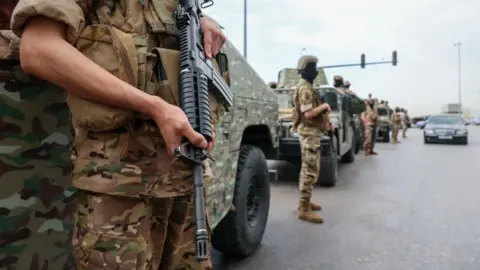
An Israeli air strike on a town in southern Lebanon has killed six people, including three paramedics, according to Lebanon's health ministry. It comes as the US said the two countries had agreed to a 45-day ceasefire. The health ministry stated that a fourth paramedic sustained critical injuries after a civil defence centre was attacked in the town of Harouf. The BBC has contacted the Israeli military for comment.On Friday, the US state department announced Israel and Lebanon had agreed to extend their shaky ceasefire after two days of negotiations in Washington DC. US President Donald Trump had initially announced the truce on 16 April, but exchanges of fire have persisted between Israel and Hezbollah. On Wednesday, Lebanon's health ministry reported that Israeli airstrikes had resulted in the deaths of 22 people, including eight children, across the south.We hope these discussions will advance lasting peace between the two countries, full recognition of each other's sovereignty and territorial integrity, and establishing genuine security along their shared border, said State Department spokesman Tommy Pigott. He mentioned that the US would reconvene discussions in June and launch a security track at the Pentagon later this month.Israel's Ambassador to the US, Yechiel Leiter, described the negotiations as frank and constructive. Lebanese Prime Minister Nawaf Salam expressed his intention to mobilize support from Arab and international communities during the negotiations with Israel. However, nearly daily reports of exchanges of fire continue to complicate the situation.Lebanon's health ministry has accused Israel of targeting civilians and paramedics—a charge that Israel denies. Meanwhile, the Israeli military claims its operations aim to establish a buffer zone in southern Lebanon to prevent future Hezbollah attacks. Human rights organizations have raised concerns about potential war crimes related to these actions, echoing sentiments from previous conflicts in Gaza.Hezbollah has also engaged in retaliatory attacks against Israeli troops using rockets and drones. Southern Lebanon remains a stronghold of the Shia community, critical to Hezbollah's support base, which has suffered significant losses and displacement due to ongoing hostilities. According to Lebanon's health ministry, over 2,896 people have died since the conflict escalated on 2 March, following a joint attack by the US and Israel on Iran. Amidst the ongoing turmoil, many civilians have lost their lives and homes, with over one million displaced, representing a fifth of Lebanon's population.