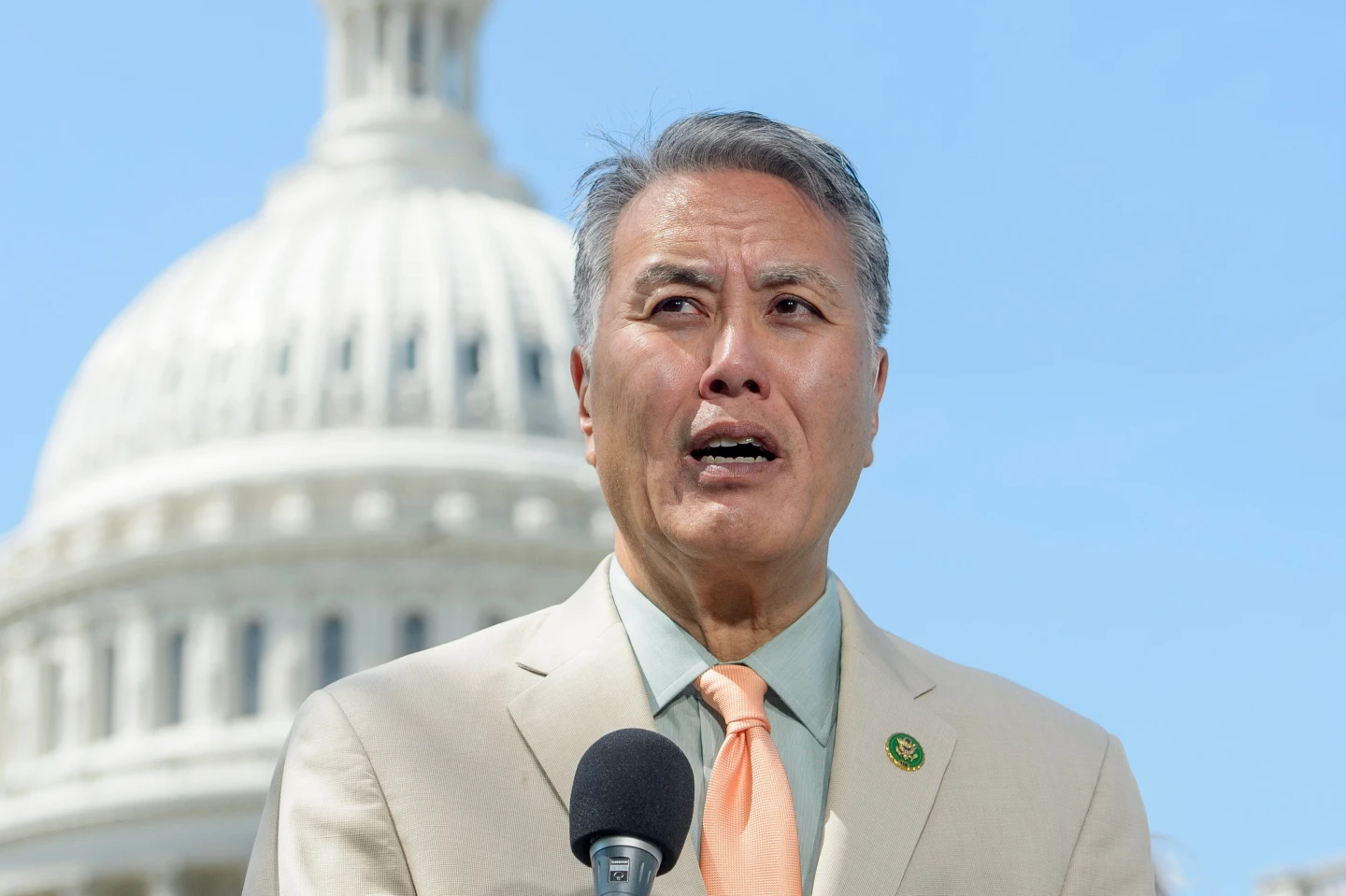
WASHINGTON — As Southern California communities braced for the Fourth of July, Congressmember Mark Takano returned home to a chilling reality: immigration patrols swarmed neighborhoods and constituents confessed to carrying passports as proof of belonging. The California Democrat, whose parents were children during the forced relocation of Japanese Americans during World War II, saw immediate parallels to America’s darkest chapter.
'Two-year-old William and one-year-old Nancy, my parents, were labeled 'enemy aliens' and sent to camps—just like the arguments we're hearing today that immigrants threaten national security,' Takano told The Associated Press. His grandfather, Isao Takano, had arrived from Hiroshima and built a business in Washington State before Pearl Harbor, only to have his family imprisoned. His father spent two years at Tule Lake camp in California; his mother endured Heart Mountain detention in Wyoming while just a toddler.
Now, as Trump's administration escalates deportations, Takano warns of history repeating itself. 'We look back on that era as shameful,' he said, referencing the Civil Liberties Act of 1988 that apologized to internees and provided $20,000 payments. 'This isn't just policy—it's rewriting America's moral compass.' The congressman points to the aftermath of two recent Minneapolis deaths—Renee Good and Alex Pretti, U.S. citizens protesting immigration enforcement—as evidence of systemic brutality.
White House leadership changes at the Department of Homeland Security have not quelled the tide. New Secretary Markwayne Mullin promised to 'keep DHS off the front pages,' yet Congress approved $1 billion in special funds for 'mass deportations.' Republican allies fuel the campaign for 1 million annual deportations, even as border communities face raids that smash car windows and destroy livelihoods.
Takano, a former high school teacher and veteran of the House Veterans' Affairs Committee, argues the government must confront its actions before future generations condemn current leaders. 'Will Americans visit Alligator Alcatraz and ask, How could we do this?' he asked during a floor speech, referencing Trump-era detention facilities. 'We need to be the Congress that stops it.'
His family's history fuels this fight: Takano's father later collected donations for redress campaigns, while relatives served in the famed 442nd Regimental Combat Team. Now, as activists demand similar redress for immigrants caught in current enforcement operations, Takano sees hope—but warns time is running out. 'Remarkably the country did realize its mistake,' he said. 'I believe we're living through one of those eras—and I believe we can emerge stronger.'}
'Two-year-old William and one-year-old Nancy, my parents, were labeled 'enemy aliens' and sent to camps—just like the arguments we're hearing today that immigrants threaten national security,' Takano told The Associated Press. His grandfather, Isao Takano, had arrived from Hiroshima and built a business in Washington State before Pearl Harbor, only to have his family imprisoned. His father spent two years at Tule Lake camp in California; his mother endured Heart Mountain detention in Wyoming while just a toddler.
Now, as Trump's administration escalates deportations, Takano warns of history repeating itself. 'We look back on that era as shameful,' he said, referencing the Civil Liberties Act of 1988 that apologized to internees and provided $20,000 payments. 'This isn't just policy—it's rewriting America's moral compass.' The congressman points to the aftermath of two recent Minneapolis deaths—Renee Good and Alex Pretti, U.S. citizens protesting immigration enforcement—as evidence of systemic brutality.
White House leadership changes at the Department of Homeland Security have not quelled the tide. New Secretary Markwayne Mullin promised to 'keep DHS off the front pages,' yet Congress approved $1 billion in special funds for 'mass deportations.' Republican allies fuel the campaign for 1 million annual deportations, even as border communities face raids that smash car windows and destroy livelihoods.
Takano, a former high school teacher and veteran of the House Veterans' Affairs Committee, argues the government must confront its actions before future generations condemn current leaders. 'Will Americans visit Alligator Alcatraz and ask, How could we do this?' he asked during a floor speech, referencing Trump-era detention facilities. 'We need to be the Congress that stops it.'
His family's history fuels this fight: Takano's father later collected donations for redress campaigns, while relatives served in the famed 442nd Regimental Combat Team. Now, as activists demand similar redress for immigrants caught in current enforcement operations, Takano sees hope—but warns time is running out. 'Remarkably the country did realize its mistake,' he said. 'I believe we're living through one of those eras—and I believe we can emerge stronger.'}