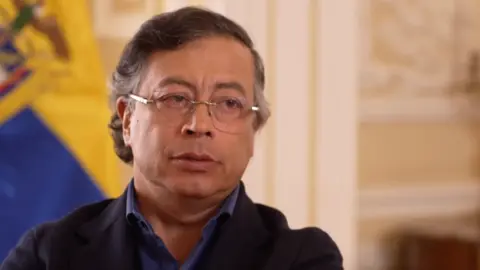
Colombia's President Gustavo Petro has told the BBC that he believes there is now a 'real threat' of US military action against Colombia. Petro said the United States is treating other nations as part of a US 'empire'. It comes after Trump threatened Colombia with military action. He said that the US risks transforming from 'dominating the world' to becoming 'isolated from the world.' He also accused US Immigration and Customs Enforcement (ICE) agents of acting like 'Nazi brigades'.
Following US strikes on Venezuela, Trump indicated that military operations targeting Colombia 'sound good'. The tone of the relationship between the two leaders has been strained, with Trump previously telling Petro to 'watch his ass', remarks met with strong condemnation. During a recent phone conversation, however, both leaders appeared to shift rhetoric. Petro described the interaction where topics like drug trafficking and Colombia's geopolitical stance were discussed.
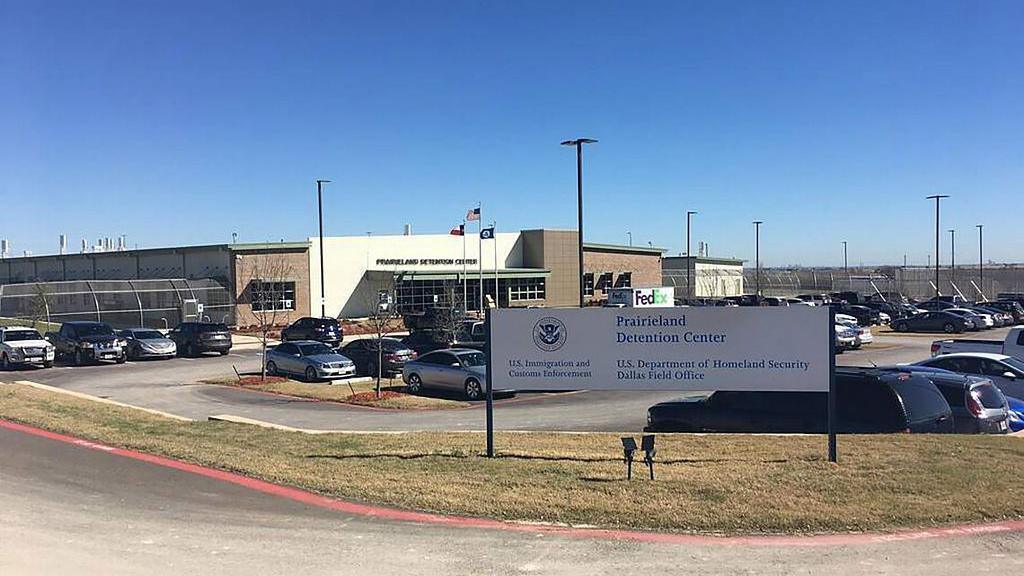
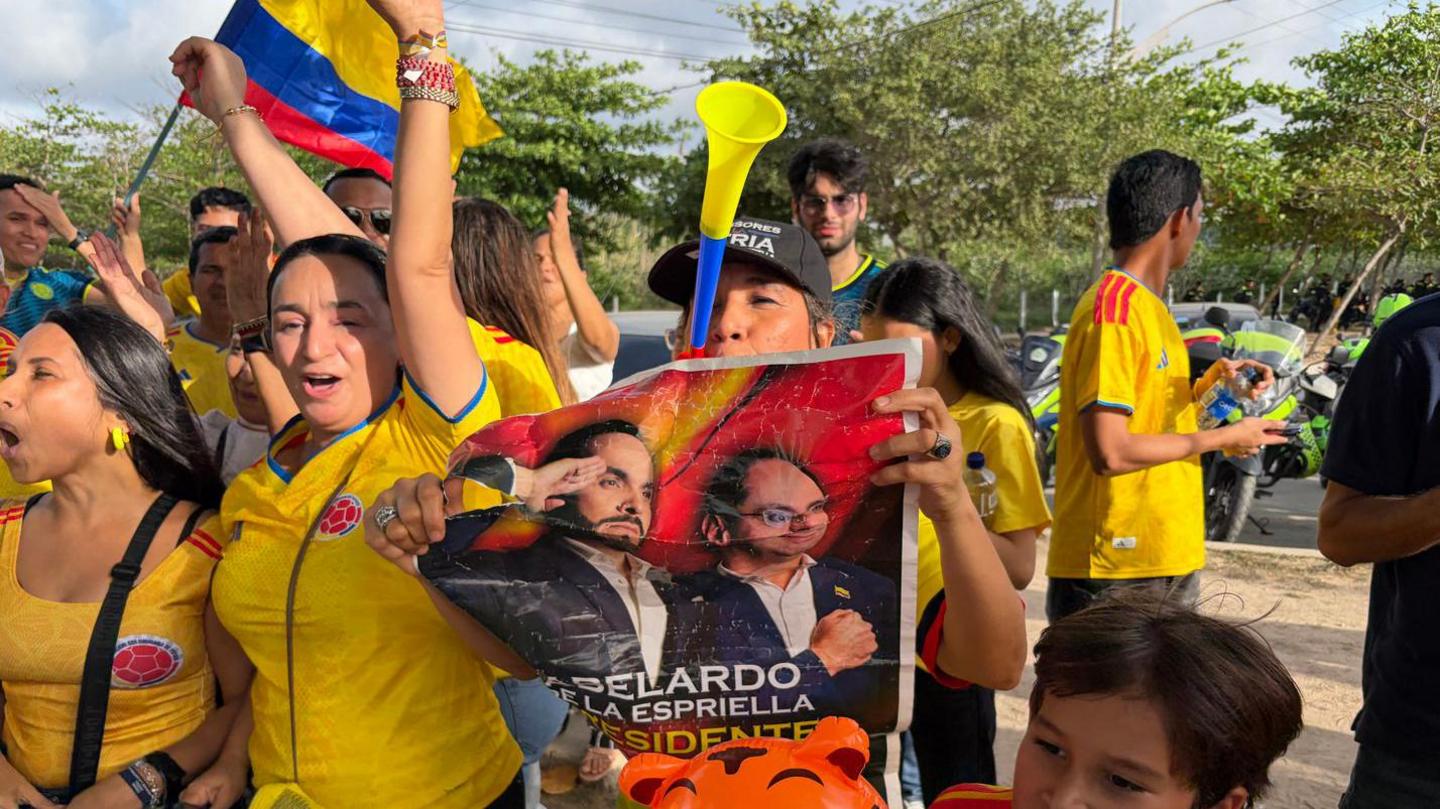
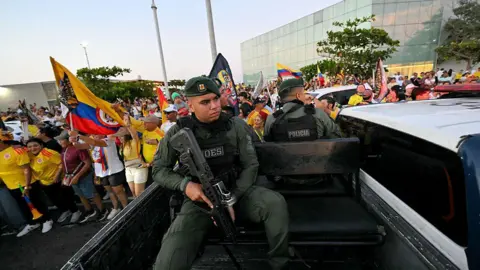
Petro heavily criticized the current US immigration policy, resulting in violence and loss of life. The actions of ICE agents, he claimed, reflect overreach, endangering not just Latin Americans but American citizens as well. Amidst these tensions, demonstrations have erupted in Colombia advocating for sovereignty in the wake of Trump's comments. Petro articulated a desire for dialogue over confrontations and expressed the importance of recognizing Colombia's history of defending its sovereignty against larger military forces. He confirmed ongoing diplomatic communications with Venezuela regarding intelligence operations related to drug trafficking.
Petro's administration faces significant challenges, especially concerning drug trade and cultivation within Colombia, as the country remains a focal point for cocaine production. The historical context of US-Colombian relations coupled with the current political climate signifies ongoing complexities and potential escalations.
Following US strikes on Venezuela, Trump indicated that military operations targeting Colombia 'sound good'. The tone of the relationship between the two leaders has been strained, with Trump previously telling Petro to 'watch his ass', remarks met with strong condemnation. During a recent phone conversation, however, both leaders appeared to shift rhetoric. Petro described the interaction where topics like drug trafficking and Colombia's geopolitical stance were discussed.
Petro heavily criticized the current US immigration policy, resulting in violence and loss of life. The actions of ICE agents, he claimed, reflect overreach, endangering not just Latin Americans but American citizens as well. Amidst these tensions, demonstrations have erupted in Colombia advocating for sovereignty in the wake of Trump's comments. Petro articulated a desire for dialogue over confrontations and expressed the importance of recognizing Colombia's history of defending its sovereignty against larger military forces. He confirmed ongoing diplomatic communications with Venezuela regarding intelligence operations related to drug trafficking.
Petro's administration faces significant challenges, especially concerning drug trade and cultivation within Colombia, as the country remains a focal point for cocaine production. The historical context of US-Colombian relations coupled with the current political climate signifies ongoing complexities and potential escalations.