In brief
In a landmark achievement, India’s space agency ISRO successfully executed its first space docking on the SpaDeX mission, launching the mission on December 30. This significant test marks India's entry into an elite group of nations capable of such advanced space technology.
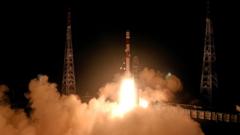
The Indian Space Research Organisation (ISRO) has made history with its SpaDeX mission, successfully conducting its first ever space docking maneuver. Launched from the Sriharikota launch pad on December 30, the mission aimed to connect two small spacecraft - the Chaser (SDX01) and the Target (SDX02) - in space, a technological advancement crucial for India’s plans to establish a space station and conduct lunar missions. Prime Minister Narendra Modi was present at ISRO's Bangalore facility during the test and expressed that this accomplishment is “a significant stepping stone for India's ambitious space missions.” Following initial delays, the docking process culminated on January 9, with ISRO achieving a feat that places India among only four countries—joining the United States, Russia, and China—with such capabilities. The mission's two spacecraft, each weighing around 220 kg (485 lbs), successfully detached from a single rocket and established adequate distance before the docking attempt. Mila Mitra, a former NASA scientist involved in the mission, explained that the Chaser gradually approached the Target, ultimately connecting them with extreme precision. The docking phase was originally set for January 7 but experienced delays for additional testing and a minor glitch during initial attempts. However, on January 9, scientists succeeded in narrowing the gap between the two spacecraft to merely three meters before securely joining them. Significantly, SpaDeX also includes experiments like transferring electrical power between the two spacecraft and testing inter-satellite communication capabilities. In addition to these tasks, the mission will deploy scientific instruments capable of measuring radiation in space and monitoring Earth’s natural resources.ISRO is efficiently utilizing a part of the rocket that launched SpaDeX—traditionally discarded as space debris—to conduct various experiments for three months. Among these is the Poem module, carrying 24 payloads, one of which has successfully shown seed germination in micro-gravity conditions. Excitingly, the continued developments of the SpaDeX mission could enable future astronauts to produce food during extended space missions, enhancing the feasibility of human exploration beyond Earth. As ISRO prepares for further ambitious projects, including the upcoming Gaganyaan mission and lunar explorations, the successful execution of SpaDeX is a clear indication that India is positioning itself as a key player in the global space race.