In brief
As the colorful Polymita snails face the threat of extinction due to their desirability among collectors, an international team of researchers is striving to save these unique creatures while uncovering their biological mysteries.
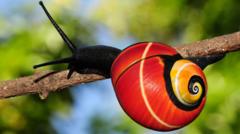
Researchers have initiated a vital conservation project aimed at saving the visually stunning Polymita tree snails, renowned for their bright, multicolored shells. Native to Eastern Cuba, these snails are not just adored for their beauty; unfortunately, they are also heavily sought after by shell collectors, leading to an alarming decline in their population. The trade of their shells poses a significant risk to their survival, which is why biologists from Cuba have teamed up with specialists from the University of Nottingham in the UK to protect the six identified species of Polymita.Among these, Polymita sulphurosa stands out with its striking lime green and blue flame patterns. Angus Davison, an evolutionary geneticist at Nottingham, highlighted the paradox of their beauty: it fuels both scientific interest and illicit collection efforts that threaten their existence. Despite international regulations protecting the snails, enforcement is weak – while it is illegal to export snails from Cuba without a permit, the sale of their shells remains legal abroad. This gap creates a perilous situation for these endangered species.To safeguard against extinction, the researchers have undertaken captive breeding projects, despite facing persistent challenges, such as unreliable power in the local climate, as explained by conservation biologist Bernardo Reyes-Tur. His home-based breeding program is essential for establishing stable populations. Meanwhile, advanced genetic research at the University of Nottingham aims to map the snail genome, ensuring better understanding of their biodiversity and the genetic traits responsible for their unique color patterns. Time is of the essence; with climate change and habitat destruction compounding the threats against them, the goal is to uncover the biological secrets of these extraordinary creatures before they are lost forever. As Prof. Davison emphasized, "Eastern Cuba is the only place in the world where these snails are found," making local expertise crucial for their conservation. The collaborative efforts of these scientists underscore the importance of combining local knowledge with international resources to preserve these vibrant snails for future generations.