In brief
As the colossal A23a iceberg, the largest in the world, drifts towards South Georgia, scientists and environmentalists express concerns about the dire consequences for the island's wildlife, which include critical breeding grounds for penguins and seals.
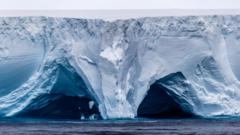
The world's largest iceberg is on a direct course towards South Georgia, a remote British island known for its rich wildlife. This impending collision poses a significant risk to local populations of penguins and seals. A23a, currently about 173 miles (280 km) away, is moving northward from Antarctica, powering towards the island's shores. Experts recall that past incidents with giant icebergs resulted in countless animal casualties, particularly birds and seals, whose feeding grounds were obstructed by ice.Captain Simon Wallace, who operates a vessel for the South Georgia government, expressed his concerns regarding the iceberg's threat to wildlife. The RAF recently conducted surveillance flights over A23a, which scientists are monitoring closely as it nears South Georgia. The iceberg, having calved from Antarctica's Filchner Ice Shelf in 1986, has finally freed itself from its previous entrapment in an ocean vortex, marking an unexpected and concerning journey towards the island.As A23a approaches, its vast cliffs—towering over 400 meters, taller than London's Shard—are also disintegrating due to warmer surrounding waters. Initially measuring about 3,900 square kilometers, its size has declined to roughly 3,500 square kilometers, comparable to Cornwall in England. The situation mirrors previous events: in 2004, another iceberg led to the loss of numerous penguin chicks and seal pups due to access barriers for feeding.Marine ecologist Mark Belchier highlighted the challenges posed by South Georgia's "iceberg alley," where collisions have serious implications for local fisheries and wildlife. Fishermen and sailors on the island report that icebergs have become a growing concern, complicating operations and increasing risks at sea. The presence of A76 earlier this year was a wake-up call, prompting the need for constant vigilance among crew members and the implementation of night searchlights to spot drifting ice.Although it is thought that climate change did not directly cause A23a's calving, experts acknowledge that warming conditions are likely to lead to more iceberg break-offs in the future. Meanwhile, during recent research expeditions, scientists managed to get close to A23a, obtaining valuable water samples to study how melting icebergs affect the carbon cycle in the Southern Ocean. PhD researcher Laura Taylor explained the critical importance of understanding the nutrients released as the iceberg melts—elements that may play a role in sequestering carbon and mitigating the impacts of climate change.As A23a continues its ominous trek toward South Georgia, both wildlife and local maritime operations brace for what could be an unprecedented impact, with scientists eager to uncover the iceberg's secrets along the way.