In brief
At the G20 foreign ministers’ meeting in Atlanta, Turkish Foreign Minister Hakan Fidan called on Russia and Ukraine to reach a peace agreement that requires substantial sacrifices. He highlighted the economic toll of the war, the impact of the Strait of Hormuz closure, disruptions to Black Sea grain trade, and the need for improved ties between Russia and Europe.
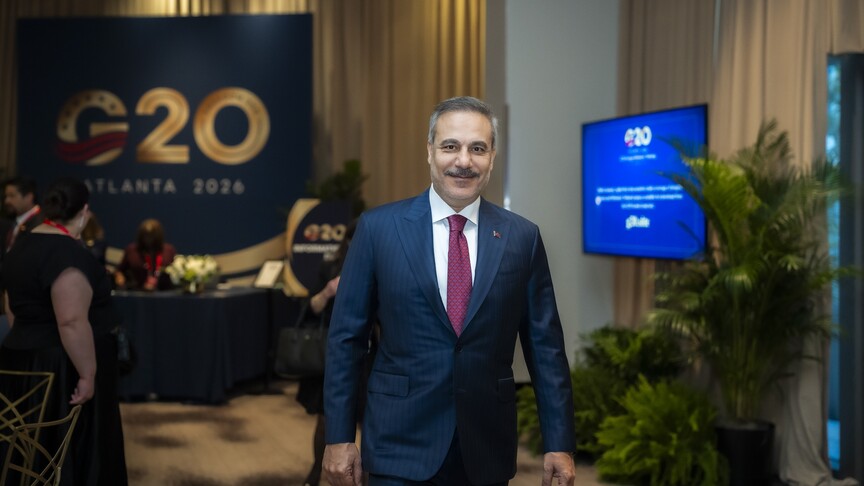
At the G20 foreign ministers’ meeting in Atlanta on Saturday, Turkish Foreign Minister Hakan Fidan called on Russia and Ukraine to make significant sacrifices to secure a lasting peace agreement, warning that the nearly five‑year war has devastated the global economy and could provoke a wider regional conflict.
The statement was made to the Turkish press and to Anadolu after Fidan addressed the meeting, emphasizing that the cost of the war cannot be ignored by European and global governments alike. “These wars are no longer sustainable. Therefore, Russia and Ukraine must reach an agreement that entails significant sacrifices,” he said, urging both sides to come to the negotiating table with a realistic willingness to concede.
Fidan noted that the war’s economic injuries have intensified over its five‑year duration, with European industries suffering from disrupted energy supplies and increased production costs. He cited the closure of the Strait of Hormuz as “a compounding factor” that amplified the price of oil and hindered international trade flows, thereby escalating the financial burden across the global supply chain.
The Turkish official also stressed the disruptions to commercial shipping in the Black Sea, where grain and energy shipments from Russia and Ukraine have stalled. “Food security is an incredibly pressing issue. It needs to be resolved as soon as possible,” Fidan stated, underscoring that the interruption of grain exports has far‑reaching implications for global food markets.
In its report, Anadolu Agency highlighted that Fidan has been actively seeking diplomatic pathways to restore Black Sea grain trade, asserting that Turkey is intensifying contact with relevant parties and making substantive efforts to facilitate a return to normal shipping routes.
Beyond the bilateral conflict, Fidan emphasized the necessity of redefining the relationship between Russia and Europe in the post‑war environment. He explained that any peace agreement would involve not only the two belligerents but also require a reconciliation process that re‑establishes trust and cooperation on matters of security and energy.
The Turkish foreign minister suggested that Europe must pursue constructive engagement with Russia after a peace settlement, noting that such a relationship is “important” for broader regional stability and economic recovery.
Given the strategic location of Turkey, its membership in NATO, and its role as a bridge between continents, Turkish officials have long cultivated a position that promotes dialogue over confrontation. Fidan’s remarks are consistent with Ankara’s longstanding approach to mediating international disputes.
Observers from the G20 and analysts at the time have taken note of the Turkish message, recognizing the balancing act imposed by Ankara’s dual affinity for European markets and its proximity to Russian political influence.
With the conflict continuing and tensions, including sporadic border flare‑ups, persisting, the urgency expressed by Turkey signals a broader appeal to global leaders to pursue diplomatic solutions that mitigate economic fallout and prevent further escalation into a larger war.