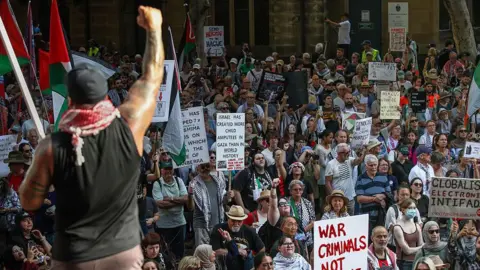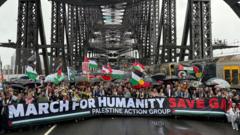
The planned protest over the Sydney Harbour Bridge known as the March for Humanity successfully took place after receiving permission from the Supreme Court just a day before it was set to occur, a development that organizers hailed as "historic." Despite fierce rain, thousands of individuals participated in the march, which included notable figures such as Julian Assange, federal MP Ed Husic, and former Premier Bob Carr.
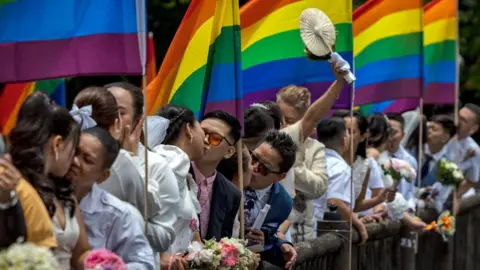
The last closure of the Sydney Harbour Bridge for a public gathering happened earlier this year during World Pride, when around 50,000 people crossed the iconic structure. However, two hours into the current march, participants received a message from NSW Police requesting that they halt their progress for safety reasons and return towards the city in an orderly manner.
Police have yet to provide an estimate of the crowd size at the march, as Transport for NSW urged motorists to avoid the area, warning of significant delays across the entire city and its public transport systems. The Palestine Action Group, a Sydney-based activist organization, had originally submitted a request to hold the march in response to what they described as "atrocities" occurring in Gaza. Initially, police had denied this request, citing insufficient time to establish a traffic management plan and concerns over potential crowd safety.
NSW Premier Chris Minns had expressed that allowing the protest could lead to disorder in Sydney. Following a rejection of police's application to prohibit the gathering, the Supreme Court, only a day before the event, ruled against the ban despite acknowledging valid safety concerns. Justice Belinda Rigg found that the urgency of the humanitarian crisis in Gaza justified the request to proceed with the march.
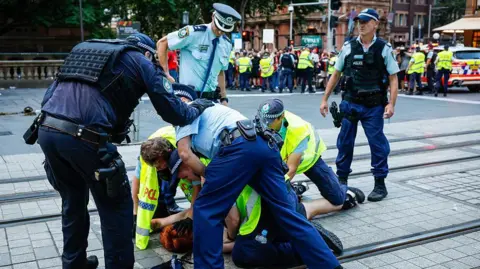
As a result of this last-minute approval, those participating in the march were provided certain legal protections under the Summary Offences Act, meaning they were exempt from penalties related to obstructing traffic. The NSW Jewish Board of Deputies, however, expressed their disappointment with the Supreme Court's ruling on social media.
Australia faces increasing international pressure to recognize Palestinian statehood, with countries like France, Canada, and the UK signaling willingness to do so with conditions at the upcoming United Nations General Assembly meeting. In a recent statement, Prime Minister Anthony Albanese reiterated his stance for recognizing Palestinian statehood, emphasizing the need for assured security for Israel before making any commitments influenced by other nations.
The last closure of the Sydney Harbour Bridge for a public gathering happened earlier this year during World Pride, when around 50,000 people crossed the iconic structure. However, two hours into the current march, participants received a message from NSW Police requesting that they halt their progress for safety reasons and return towards the city in an orderly manner.
Police have yet to provide an estimate of the crowd size at the march, as Transport for NSW urged motorists to avoid the area, warning of significant delays across the entire city and its public transport systems. The Palestine Action Group, a Sydney-based activist organization, had originally submitted a request to hold the march in response to what they described as "atrocities" occurring in Gaza. Initially, police had denied this request, citing insufficient time to establish a traffic management plan and concerns over potential crowd safety.
NSW Premier Chris Minns had expressed that allowing the protest could lead to disorder in Sydney. Following a rejection of police's application to prohibit the gathering, the Supreme Court, only a day before the event, ruled against the ban despite acknowledging valid safety concerns. Justice Belinda Rigg found that the urgency of the humanitarian crisis in Gaza justified the request to proceed with the march.
As a result of this last-minute approval, those participating in the march were provided certain legal protections under the Summary Offences Act, meaning they were exempt from penalties related to obstructing traffic. The NSW Jewish Board of Deputies, however, expressed their disappointment with the Supreme Court's ruling on social media.
Australia faces increasing international pressure to recognize Palestinian statehood, with countries like France, Canada, and the UK signaling willingness to do so with conditions at the upcoming United Nations General Assembly meeting. In a recent statement, Prime Minister Anthony Albanese reiterated his stance for recognizing Palestinian statehood, emphasizing the need for assured security for Israel before making any commitments influenced by other nations.