In brief
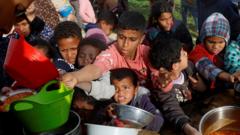
The UN warns that community kitchens in Gaza may soon exhaust their supplies, leaving many without food as aid trucks cease operations due to Israel's measures against Hamas allegations.
The humanitarian crisis in Gaza escalates as Israel suspends the entry of aid, resulting in skyrocketing food prices. The UN's Office for the Coordination of Humanitarian Affairs (OCHA) reported alarming increases in staples like flour and vegetables, with some prices more than doubling. The dire situation threatens the sustenance of numerous community kitchens that rely on these aid supplies.Israeli Prime Minister Benjamin Netanyahu halted humanitarian assistance over accusations that Hamas was misappropriating supplies, dismissing a US proposal for extending previous ceasefire arrangements. A representative from Hamas criticized this action as "cheap blackmail," further heightening tensions.Concerned with the unfolding humanitarian disaster, the foreign ministers from France, Germany, and the UK issued a joint statement calling for a reassessment of the situation. They emphasized that access to humanitarian aid must not be contingent on political negotiations and warned of potential violations of international humanitarian law. Their statement underscored the necessity for a sustained ceasefire and the uninterrupted flow of aid.Since the ceasefire began on January 19, a significant number of aid trucks had supplied Gaza weekly. However, as hostilities resumed, Netanyahu's office accused Hamas of diverting aid funds for its military operations, leading to an immediate halt of assistance. The blockade has prompted aid workers to reduce food rations and adjust meal preparations in anticipation of further shortages.Residents in Gaza are feeling the impact acutely; many report dramatic fare increases. For instance, Abu Qais Aryan from Khan Younis stated that basic food items, including tomatoes and cucumbers, saw a notable price surge overnight. Some residents attributed the rising costs to market manipulation by traders who claimed their suppliers had increased prices.Humanitarian organizations like Doctors Without Borders (MSF) decried the implications of the blockade, asserting that such a move exacerbates the struggles of innocent civilians and violates fundamental humanitarian rights. Additionally, Qatar and Egypt condemned the blockade, characterizing it as a breach of the ceasefire agreement and a form of collective punishment against the Palestinian population.While some supplies managed to reach Gaza prior to the blockade, concerns grow regarding the sustainability of remaining aid inventory. Medical Aid for Palestinians (MAP) indicated limited reserves exist, mostly intended for immediate distribution, leaving vulnerable populations at risk amid the blockade.The ongoing conflict, which has already claimed thousands of lives since its escalation on October 7, 2023, continues to impact both sides, but it is the civilians of Gaza who face the brunt of these restrictive measures. The situation demands urgent attention as residents brace for worsening scarcity and soaring costs amidst a compounding humanitarian crisis.