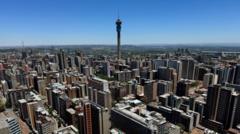
In the heart of Johannesburg, the Ponte Tower stands as a symbol of the city's dramatic transformation. Once a notorious hub of criminal activity, this towering structure—erected in 1975 and once Africa's tallest residential building—has seen its share of turmoil. Delight Sithole, a local tour guide, recalls the grim realities of the 1980s when gangs took over the building, leaving its core filled with debris up to 50 meters deep. "People literally threw their trash inside because the utilities were gone," he shared, emphasizing the despair of the era.
For a long time, Johannesburg was labeled one of the world's most unsafe cities. The fear surrounding Ponte Tower and its neighborhood was palpable, with residents often sharing horrifying tales. However, a turning point emerged after the Fifa World Cup in 2010, sparking a revival that has only gained momentum in recent years. Today, with around 75% occupancy and a renewed spirit, the tower's legacy is slowly being rewritten.
Despite advancements, the city still grapples with significant challenges. While the notorious power outages known as load-shedding have lessened, a new water crisis threatens to destabilize the community. A recent tragic fire in the Central Business District claimed nearly 80 lives, a stark reminder of the ongoing struggle with hijacked buildings—those overtaken by criminal factions that impose rent on vulnerable families.
However, hope remains. The property development firm Ithemba—meaning "hope" in Zulu—has launched initiatives to rejuvenate the area. Alan Tait, a senior manager at Ithemba, mentions that they currently manage 7,200 residences, with plans to double that number in the next two years. A key part of this revival is Jewel City, a district that previously fell into decline but is making a stunning comeback.
Improvements also manifest through projects initiated by JoziMyJozi, which aims to illuminate dark areas and restore safety to neglected spaces. Their early accomplishments include lighting up the Nelson Mandela Bridge, which has increased foot traffic and relayed a message of rebirth. Bea Swanepoel, the organization's CEO, emphasizes their mission: "We want to instill hope and demonstrate that change is not only necessary but achievable."
With the city poised to host the G20, Johannesburg is drawing fresh investments and international attention. Overall, there’s an emerging sentiment that Johannesburg could become a leading city in Africa, comparable to global metropolises like London or New York. Sifiso Zikhali, a proactive member of Dlala Nje, articulates this optimism. "Everything we face poses a challenge, but together we can find solutions—this is our city, and we are determined to make it thrive."