In brief
South Africans in Johannesburg's leafy suburbs are protesting against prolonged water shortages, claiming criminal gangs are taking advantage of the crisis. As some areas report no water for months, accusations surface against syndicates controlling tanker distribution. President Ramaphosa has vowed to tackle water-related crime but residents remain anxious about the lack of reliable access to clean water.
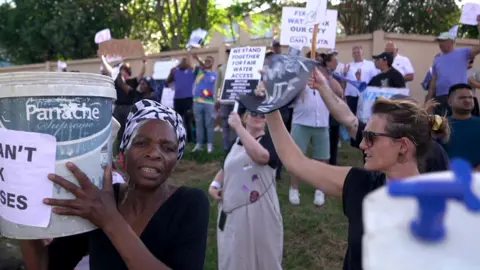
In the Johannesburg suburb of Greenside, a large group of protesters of all ages and backgrounds are waving placards and banging empty plastic bottles together. We want water, we want water! they chant. Northern Johannesburg, known for its affluent neighborhoods, is seeing residents fed up with years of intermittent water shortages—some have been without running water for over a month. Our pipes have been bone dry, no water at all, shares Colin Regesky, a resident. Another protester, Jenny Gillies, describes the ongoing struggle as an actual disgrace, highlighting a lack of access to one of life's fundamentals.The water shortages have been exacerbated by criminal gangs, dubbed 'water mafias,' who have reportedly monopolized the water tanker industry, charging residents for water that should be free. Concerns have been raised about how these groups may be damaging infrastructure to prolong their contracts with municipalities, in a pattern seen in regions in South Africa where service delivery has faltered.While President Cyril Ramaphosa has called for a crackdown on these gangs, residents are left questioning the efficacy of government responses amid their ongoing struggles for access to clean water, essential for their health and well-being. Many feel the government's actions thus far have failed to meet their urgent needs, leaving them to protest for basic rights.