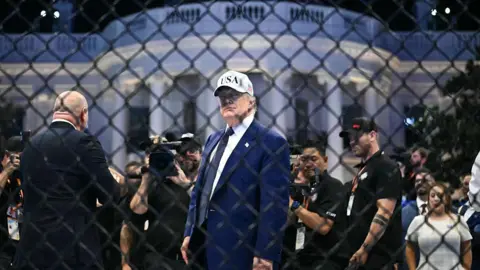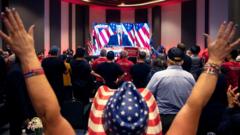
Throughout the campaign, Trump's unfiltered style kept him in the spotlight. While many voters acknowledged his divisive character, they resonated with his central campaign query: “Are you better off now than you were two years ago?” The nostalgia for the perceived economic stability of his first term played a crucial role in their decision-making process.
With immigration a hot-button issue, voters clamored for stricter border control, disheartened by increased illegal immigration rates under Biden. Drawing on the populist sentiment of his “America First” slogan, Trump positioned himself as a candidate for change—even though he had previously served just four years earlier. Some voters, dissatisfied with Vice President Kamala Harris, viewed her as a continuation of Biden's policies.
Trump's return to power, however, comes with its own set of ironies: he once warned about the threats to democracy and has faced recent criminal accusations linked to the Capitol riots and other scandals. If reinstated, he could potentially leverage his presidential immunity to shield himself from legal repercussions, including the 6 January fallout.
As tensions brew over his authoritarian inclinations—boasting admiration for global leaders like Putin—questions loom over the stability and future of American democracy. Notably, his campaign rhetoric has raised alarms regarding press freedom and conspiracy theories surrounding the election process.
As the global community prepares for his second term, the implications of his proclaimed “America First” agenda will unfold. With the potential to implement proposed tariffs and reshape international relations, both America and the world are bracing for what a second Trump administration could mean in a volatile global landscape.
The stakes could not be higher as history seems poised to repeat itself. The outcome of Trump's comeback will impact not just the United States but the world at large, echoing the complexities of leadership amid profound partisanship.
With immigration a hot-button issue, voters clamored for stricter border control, disheartened by increased illegal immigration rates under Biden. Drawing on the populist sentiment of his “America First” slogan, Trump positioned himself as a candidate for change—even though he had previously served just four years earlier. Some voters, dissatisfied with Vice President Kamala Harris, viewed her as a continuation of Biden's policies.
Trump's return to power, however, comes with its own set of ironies: he once warned about the threats to democracy and has faced recent criminal accusations linked to the Capitol riots and other scandals. If reinstated, he could potentially leverage his presidential immunity to shield himself from legal repercussions, including the 6 January fallout.
As tensions brew over his authoritarian inclinations—boasting admiration for global leaders like Putin—questions loom over the stability and future of American democracy. Notably, his campaign rhetoric has raised alarms regarding press freedom and conspiracy theories surrounding the election process.
As the global community prepares for his second term, the implications of his proclaimed “America First” agenda will unfold. With the potential to implement proposed tariffs and reshape international relations, both America and the world are bracing for what a second Trump administration could mean in a volatile global landscape.
The stakes could not be higher as history seems poised to repeat itself. The outcome of Trump's comeback will impact not just the United States but the world at large, echoing the complexities of leadership amid profound partisanship.