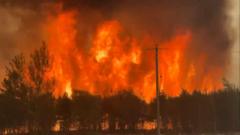
As wildfires rage across western Canada, a military aircraft and helicopters are mobilized to evacuate residents in Manitoba. Facing rapidly advancing flames, thousands have already fled regions, particularly the central prairie provinces of Saskatchewan and Manitoba. With over 180 fires reported, officials have declared states of emergency for a month and reached out for international assistance in battling the blazes.
Dramatic aerial footage captured the massive plumes of smoke rising from the wildfires, impacting not only Canada but extending into parts of the United States as well. Northern First Nations communities like Pukatawagan are particularly affected, and this "rapidly evolving situation" has prompted the Canadian Armed Forces and various local services to facilitate the safe transport of residents. Reports indicate that more than 2,000 individuals remain awaiting evacuation from this endangered area, while Flin Flon, a town of 5,000, has seen a drastic reduction in its population, with only firefighters and support personnel remaining.
Manitoba is currently confronting the most severe wildfire conditions in Canada, with a total of 25 fires, including 10 classified as out of control, as noted in the latest fire situation report. However, this crisis extends beyond Manitoba, as Saskatchewan battles 16 active wildfires, with seven described as not contained. The Canadian Interagency Forest Fire Centre has classified conditions in Saskatchewan as extreme.
Danielle Desjardins, a meteorologist from Environment and Climate Change Canada, shared an unpromising perspective on the weather outlook for both provinces. While a cold front is expected in parts of Saskatchewan, it will not alleviate the fire conditions due to projected windy conditions that – combined with heat and a lack of precipitation – create a perfect storm for wildfire spread.
The smoke from the raging fires has imposed considerable air quality concerns down into the United States, affecting an estimated 22 million Americans this weekend. Michigan and Wisconsin have issued advisories, while northern Minnesota residents are warned that smoke levels could reach unhealthy thresholds for all, with alerts running until Monday evening.
Canada is enduring its most intense wildfire season on record in 2023, with over 42 million acres (17.3 million hectares) burned. Although wildfires are a natural occurrence in numerous global regions, experts from the UN's climate body assert that climate change is increasingly contributing to conditions conducive to wildfire proliferation. Rising heat trends extract moisture from soil and vegetation, worsening circumstances across the region.
Dramatic aerial footage captured the massive plumes of smoke rising from the wildfires, impacting not only Canada but extending into parts of the United States as well. Northern First Nations communities like Pukatawagan are particularly affected, and this "rapidly evolving situation" has prompted the Canadian Armed Forces and various local services to facilitate the safe transport of residents. Reports indicate that more than 2,000 individuals remain awaiting evacuation from this endangered area, while Flin Flon, a town of 5,000, has seen a drastic reduction in its population, with only firefighters and support personnel remaining.
Manitoba is currently confronting the most severe wildfire conditions in Canada, with a total of 25 fires, including 10 classified as out of control, as noted in the latest fire situation report. However, this crisis extends beyond Manitoba, as Saskatchewan battles 16 active wildfires, with seven described as not contained. The Canadian Interagency Forest Fire Centre has classified conditions in Saskatchewan as extreme.
Danielle Desjardins, a meteorologist from Environment and Climate Change Canada, shared an unpromising perspective on the weather outlook for both provinces. While a cold front is expected in parts of Saskatchewan, it will not alleviate the fire conditions due to projected windy conditions that – combined with heat and a lack of precipitation – create a perfect storm for wildfire spread.
The smoke from the raging fires has imposed considerable air quality concerns down into the United States, affecting an estimated 22 million Americans this weekend. Michigan and Wisconsin have issued advisories, while northern Minnesota residents are warned that smoke levels could reach unhealthy thresholds for all, with alerts running until Monday evening.
Canada is enduring its most intense wildfire season on record in 2023, with over 42 million acres (17.3 million hectares) burned. Although wildfires are a natural occurrence in numerous global regions, experts from the UN's climate body assert that climate change is increasingly contributing to conditions conducive to wildfire proliferation. Rising heat trends extract moisture from soil and vegetation, worsening circumstances across the region.