Human rights organizations, including Human Rights Watch and FairSquare, have issued alarming reports pointing to a significant rise in fatalities among migrant construction workers in Saudi Arabia, especially as the country prepares for the 2034 World Cup. These organizations emphasize that many of these deaths stem from preventable workplace accidents and are often misclassified as natural causes, leaving bereaved families without compensation.
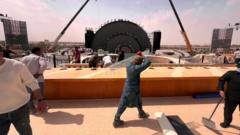
Minky Worden, director of Global Initiatives at Human Rights Watch, expressed concerns that while the upcoming World Cup is set to be the largest and most expensive in history, it may also incur the highest human toll, as millions of migrant laborers work on major infrastructure projects, including the construction of 11 stadiums and extensive hospitality facilities.
The warnings emerged soon after FIFA President Gianni Infantino and former U.S. President Donald Trump attended an investment forum in Saudi Arabia. FIFA maintains a commitment to human rights, but critics accuse them of overlooking the lessons from migrant worker fatalities during the Qatar 2022 World Cup.
Acquiring accurate data on migrant worker deaths remains a challenge in Saudi Arabia due to restricted access for rights organizations and the prohibition of labor unions. Human Rights Watch gathered accounts from the families of 31 workers hailing from countries like Bangladesh, India, and Nepal, who have tragically suffered accidents involving falls, machinery-related fatalities, and electrocution—which are only exacerbated by the extreme heat conditions as construction intensifies.
In March, the first confirmed death tied to the World Cup occurred when a Pakistani foreman fell at a stadium site in Al Khobar. Last year, the Saudi government declared improvements in occupational health and safety, but the global construction union, BWI, reported an alarming increase in preventable accidents attributed to systemic negligence and poor oversight.
FairSquare highlighted the concerning absence of thorough autopsies to accurately determine the causes of deaths among migrant workers. Co-director James Lynch criticized FIFA's human rights policies as insubstantial, arguing that while FIFA promotes Saudi Arabia positively, many families in nations like Nepal remain devastated by the loss of fathers, never understanding the circumstances of their deaths.
Despite the skepticism surrounding the Saudi government’s assurances, FIFA announced intentions to implement a workers' welfare system, aiming to develop mandatory standards and enforcement mechanisms regarding the treatment of workers involved in World Cup-related projects. However, Human Rights Watch criticized the lack of details regarding the proposed system.
Calling for greater accountability, the organization has urged Saudi authorities and FIFA to ensure that all migrant worker fatalities, irrespective of their perceived causes, are thoroughly investigated, and that families receive the owed respect and compensation.
The BBC has reached out to Saudi authorities for comment regarding these critical issues surrounding worker safety and welfare.
Minky Worden, director of Global Initiatives at Human Rights Watch, expressed concerns that while the upcoming World Cup is set to be the largest and most expensive in history, it may also incur the highest human toll, as millions of migrant laborers work on major infrastructure projects, including the construction of 11 stadiums and extensive hospitality facilities.
The warnings emerged soon after FIFA President Gianni Infantino and former U.S. President Donald Trump attended an investment forum in Saudi Arabia. FIFA maintains a commitment to human rights, but critics accuse them of overlooking the lessons from migrant worker fatalities during the Qatar 2022 World Cup.
Acquiring accurate data on migrant worker deaths remains a challenge in Saudi Arabia due to restricted access for rights organizations and the prohibition of labor unions. Human Rights Watch gathered accounts from the families of 31 workers hailing from countries like Bangladesh, India, and Nepal, who have tragically suffered accidents involving falls, machinery-related fatalities, and electrocution—which are only exacerbated by the extreme heat conditions as construction intensifies.
In March, the first confirmed death tied to the World Cup occurred when a Pakistani foreman fell at a stadium site in Al Khobar. Last year, the Saudi government declared improvements in occupational health and safety, but the global construction union, BWI, reported an alarming increase in preventable accidents attributed to systemic negligence and poor oversight.
FairSquare highlighted the concerning absence of thorough autopsies to accurately determine the causes of deaths among migrant workers. Co-director James Lynch criticized FIFA's human rights policies as insubstantial, arguing that while FIFA promotes Saudi Arabia positively, many families in nations like Nepal remain devastated by the loss of fathers, never understanding the circumstances of their deaths.
Despite the skepticism surrounding the Saudi government’s assurances, FIFA announced intentions to implement a workers' welfare system, aiming to develop mandatory standards and enforcement mechanisms regarding the treatment of workers involved in World Cup-related projects. However, Human Rights Watch criticized the lack of details regarding the proposed system.
Calling for greater accountability, the organization has urged Saudi authorities and FIFA to ensure that all migrant worker fatalities, irrespective of their perceived causes, are thoroughly investigated, and that families receive the owed respect and compensation.
The BBC has reached out to Saudi authorities for comment regarding these critical issues surrounding worker safety and welfare.