In brief
A chemist at Memorial University of Newfoundland believes he has identified peculiar blobs found on local shores, despite ongoing investigations by Canadian authorities. The blobs, which have been appearing since September, have a petrochemical odor and have been linked to synthetic materials.
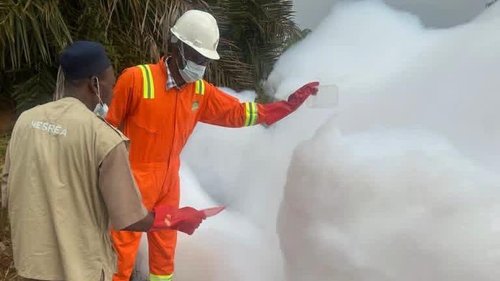
A chemist from Canada’s Memorial University of Newfoundland claims to have made significant progress in identifying the bizarre blobs that have recently surfaced on the region's beaches. While officials from Canada’s environmental agency are still conducting assessments, Chris Kozak has shared insights about the spongy, white masses that have been discovered along Placentia Bay since September.Local residents first reported the blobs, which vary in size from a coin to a dinner plate, prompting both community and scientific interest. Kozak, alongside his research team, collected samples for analysis as the Canadian government began its own investigation.Characterizing the blobs, Kozak noted their distinct petrochemical smell, reminiscent of turpentine. Initially hypothesizing that the substance might be polyurethane—a material commonly used in the fishing industry, particularly for insulating boats—he dismissed this idea after observing that the blobs sink, contradicting polyurethane’s buoyancy.Further chemical analysis revealed that the blobs contain carbon, hydrogen, and oxygen but lack nitrogen and sulfur, indicating they likely do not originate from natural sources. The absence of silicon in the chemical makeup also ruled out common materials like silicone latex or caulking.As research continues, the local community awaits conclusive findings from authorities regarding the potential environmental impacts and origins of these peculiar blobs.