In a significant development, three Israeli hostages were released from Hamas captivity on Saturday in a highly anticipated exchange involving 183 Palestinian prisoners held by Israel. The hostages, Yarden Bibas, Ofer Kalderon, and Keith Siegel, were handed over to the Red Cross in a more organized procedure than previous releases, which had witnessed chaotic scenes.
Hamas' decision to release the hostages aligns with a ceasefire agreement established last month, prompting public jubilation in Israel. The families of the released individuals expressed overwhelming joy after enduring lengthy periods of uncertainty. Mr. Siegel’s wife, Aviva, celebrated the moment, while the family of French-Israeli Mr. Kalderon described their relief after 484 agonizing days of waiting. They highlighted the emotional toll and hardships faced during his captivity, noting the hope of reuniting with their children.
Despite the joyful atmosphere, there remains a complex web of feelings among families and communities. Liz Domsky, watching from Hostages Square, voiced a desire for all hostages to return home. Although Mr. Siegel appeared physically recovered, his family worried about his well-being, as they noted visible signs of distress and weight loss.
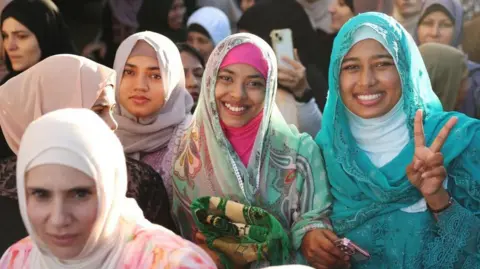
Concurrent with Israeli celebrations, the release of Palestinian prisoners in the West Bank was met with festivities. Freed captive Nasrallah Muammar proclaimed a reclaiming of life after years of confinement. Many among the released Palestinians had faced long and arduous sentences, often under controversial "administrative detention" practices that critics argue amount to unjust imprisonment without trial.
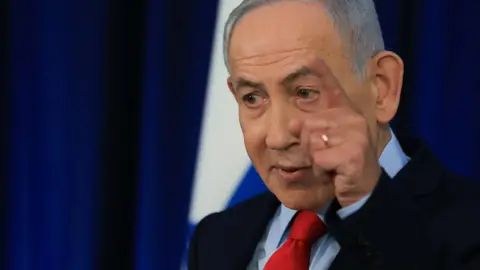
Israeli Prime Minister Benjamin Netanyahu expressed disapproval of the chaotic scenes during previous handovers, leading to calls for improved security measures during these exchanges. International Committee of the Red Cross President Mirjana Spoljaric highlighted the need for dignified handling of such sensitive releases.
The Israel-Hamas conflict rages on, with hostilities resultant from the ongoing violence since both sides escalated their military actions. The current ceasefire facilitates humanitarian aid and enables hundreds of displaced Palestinians to return to their homes, although many return to devastation from airstrikes.
As fresh chapters unfold in this conflicted region, both communities strive for stability and healing amidst heart-wrenching losses and cautious optimism for peace.
Hamas' decision to release the hostages aligns with a ceasefire agreement established last month, prompting public jubilation in Israel. The families of the released individuals expressed overwhelming joy after enduring lengthy periods of uncertainty. Mr. Siegel’s wife, Aviva, celebrated the moment, while the family of French-Israeli Mr. Kalderon described their relief after 484 agonizing days of waiting. They highlighted the emotional toll and hardships faced during his captivity, noting the hope of reuniting with their children.
Despite the joyful atmosphere, there remains a complex web of feelings among families and communities. Liz Domsky, watching from Hostages Square, voiced a desire for all hostages to return home. Although Mr. Siegel appeared physically recovered, his family worried about his well-being, as they noted visible signs of distress and weight loss.
Concurrent with Israeli celebrations, the release of Palestinian prisoners in the West Bank was met with festivities. Freed captive Nasrallah Muammar proclaimed a reclaiming of life after years of confinement. Many among the released Palestinians had faced long and arduous sentences, often under controversial "administrative detention" practices that critics argue amount to unjust imprisonment without trial.
Israeli Prime Minister Benjamin Netanyahu expressed disapproval of the chaotic scenes during previous handovers, leading to calls for improved security measures during these exchanges. International Committee of the Red Cross President Mirjana Spoljaric highlighted the need for dignified handling of such sensitive releases.
The Israel-Hamas conflict rages on, with hostilities resultant from the ongoing violence since both sides escalated their military actions. The current ceasefire facilitates humanitarian aid and enables hundreds of displaced Palestinians to return to their homes, although many return to devastation from airstrikes.
As fresh chapters unfold in this conflicted region, both communities strive for stability and healing amidst heart-wrenching losses and cautious optimism for peace.