In brief
The research emphasizes the accelerated loss of glacier ice due to climate change, with profound implications for millions relying on glacial meltwater and increasing coastal flood risks.
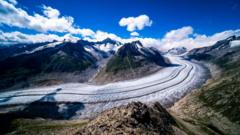
As global temperatures continue to rise due to human activities, the world’s glaciers are experiencing unprecedented rates of melting, according to a recent comprehensive analysis conducted by scientific teams worldwide. The study highlights that mountain glaciers, which play a crucial role as freshwater reservoirs for billions, have lost over 6,500 billion tonnes of ice since the early 2000s. This significant reduction translates to an overall loss of approximately 5% of glacier mass, with the rate of melting accelerating alarmingly in the last decade compared to earlier years.One prominent example, the Aletsch Glacier in the European Alps, has retreated by about 3.2 kilometers since 1900, with more than one kilometer lost just since 2000. The report indicates that the pace of ice loss is increasing; glacier ice loss from 2000 to 2023 averaged around 270 billion tonnes annually. This staggering amount is equivalent to the water consumption of the entire global population for 30 years, as revealed by Michael Zemp, director of the World Glacier Monitoring Service.With climate change as a primary factor, glaciers across the globe have shrunk significantly in size, primarily due to rising temperatures linked to fossil fuel consumption. Central Europe alone has witnessed a dramatic 39% decrease in glacier ice over just two decades. Researchers have accentuated the novelty of the study, which synthesis over 230 regional assessments from various research groups to present a clearer picture of glacier dynamics.By employing diverse methods, including field measurements and satellite data, this extensive research provides a reliable resource for climate scientists, policymakers, and industries. Projections show that the extent of melting by the century's end could vary considerably, depending on global carbon dioxide emissions. If climate targets are met, only a quarter of glacier ice may be lost, but this could soar to nearly half if warming continues unchecked.The ripple effects of melting glaciers extend beyond local landscapes. With hundreds of millions of people dependent on seasonal meltwater for agriculture and drinking, the reduction of glacial mass poses a significant threat to water security. Additionally, rising sea levels resulting from glacier and ice sheet melt increase the risk of coastal flooding, increasing exposure for millions worldwide. Prof Shepherd emphasized that even modest rises in sea level can dramatically raise the incidence of annual flooding, with this situation likely to worsen in coming decades.As the world grapples with these challenges, the implications of melting glaciers warrant immediate global attention and action to curb future emissions.