In brief
A recent study has unveiled that ancient Egyptian mummies emit surprisingly pleasant smells, described as woody, spicy, and sweet. Researchers aim to reconstruct these scents for future museum visitors, enhancing the understanding of ancient mummification practices.
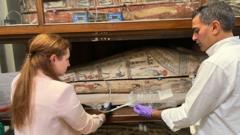
In a fascinating revelation, scientists have discovered that mummified bodies from ancient Egypt still exude delightful aromas even after 5,000 years in sarcophagi. An investigation into nine mummies revealed that while the intensity of the aromas varied, all could be categorized as "woody," "spicy," and "sweet." According to Cecilia Bembibre, one of the researchers, the team aims to chemically recreate these mummy scents for presentation at the Egyptian Museum in Cairo, allowing the public to experience what ancient Egyptians might have encountered.The mummification tradition in ancient Egypt involved surrounding the deceased with pleasant fragrances, significant for preparing the spirit for the afterlife. Consequently, members of high society, such as pharaohs, were treated with oils, waxes, and balms during this process. The study challenged the common portrayal of mummies in popular culture, with Dr. Bembibre expressing surprise at the pleasantness of the scent. The study, published in the Journal of the American Chemical Society, was conducted by researchers from University College London and the University of Ljubljana in Slovenia. They developed a method to extract the scent from the mummies without harming them, using a diminutive tube to measure the aromas. Bembibre noted that heritage scientists often seek "non-destructive" techniques to uncover novel information about historical artifacts.Ally Louks from the University of Cambridge, who focused on the politics of smell for her PhD thesis, labeled the research as innovative. She emphasized the strong emotional and physical connections that scents can evoke in audiences, underscoring the cultural significance of aromas in ancient Egyptian religious and social practices.Additionally, Matija Strlič, another researcher, posited that the discovered scents could serve as indicators of a mummy's social class. He suggested the new approach could have wider implications for museum collections around the world. Beyond enriching the museum experience, the findings have significant ramifications for mummy conservation. The researchers utilized gas chromatography to isolate different scents from within the sarcophagus, identifying odors linked to the degradation of animal fats employed in the embalming. This revelation may assist conservators in discovering optimal storage and preservation methods for these ancient bodies, as indicated in the study. Dr. Bembibre concluded stating, "We can ensure [the collection] reaches future generations."