In brief
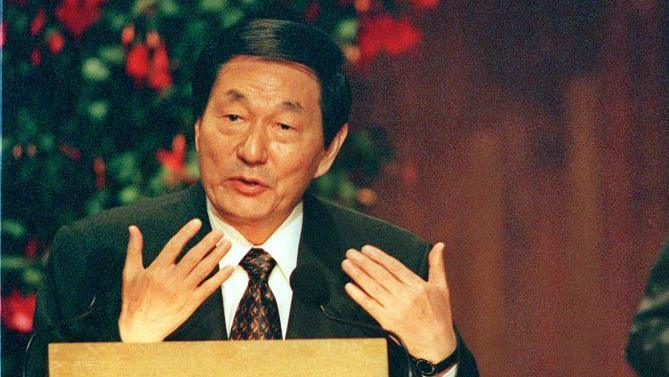
Zhu Rongji, the powerhouse behind China’s entry into global trade and its explosive growth, died at 97. The former premier, who served from 1998 to 2003, played a leading role in securing WTO membership and opening Chinese factories to the world. Renowned as a pragmatic reformer, he shifted tax powers to the central government, privatized stalled state firms and promoted home ownership. His tenure accelerated China’s transformation into a manufacturing giant, though it also triggered significant layoffs and widening inequality. State media hailed him as a “loyal Communist fighter” and a brilliant leader.
Zhu Rongji, who pioneered China’s integration into the global market, has died at the age of 97. He led the country as premier from 1998 to 2003, steering negotiations that culminated in China’s WTO membership in 2002. During his tenure the government moved local tax authority to the central level, privatized struggling state firms and promoted residential ownership, helping China shift from a Communist outsider to a manufacturing powerhouse.
A tough and pragmatic leader, he was celebrated for delivering double‑digit growth and rarely shying away from speaking his mind about corruption, inequality and local officials acting like tyrants. In 1998 he warned of “potential crises” that could erupt anytime, labeling rogue bankers as “half‑wits” and describing Yangtze River dykes as “flimsy and porous.”
Zhu’s reforms, however, spurred 30 million job losses over five years and further widened inequality. Chinese state media described his life as one of “revolution, struggle and brilliance.” He was born in Hunan in 1928, earned a degree in electrical engineering, joined the civil service, and joined the Communist Party in 1949. After being purged twice—for criticizing Mao’s policies and during the Cultural Revolution—he was re‑integrated post‑Mao and rose to vice‑premier in 1991 before becoming premier seven years later.