In brief
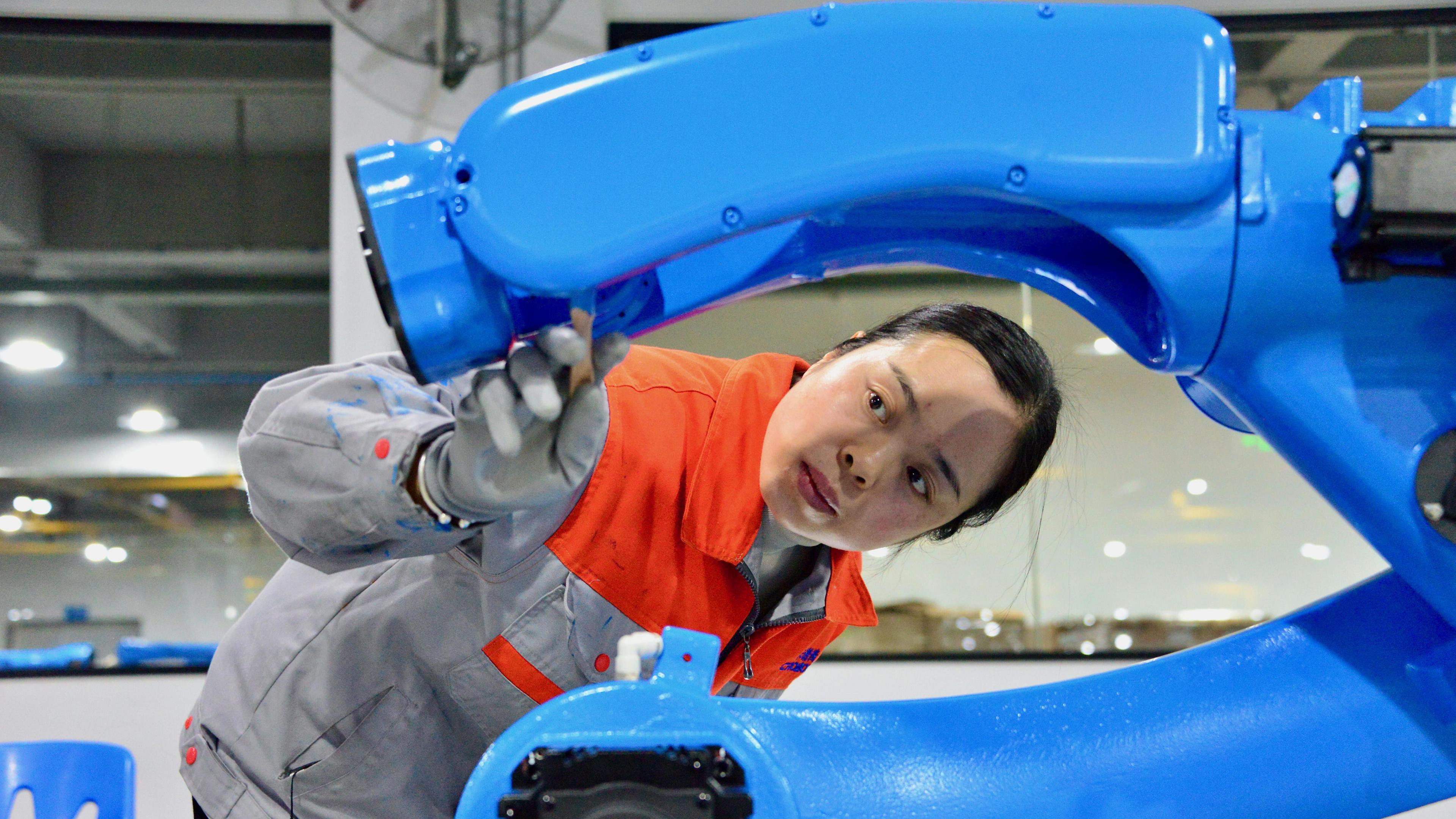
China’s 20‑billion‑dollar push to dominate robotics has sparked a silent revolution that is already reshaping its factories and its classrooms. Students as young as 15 are learning to code and build robot arms that can perform over 90% of repetitive tasks. Around 2 million robots are now operating across Chinese factories—more than any other country. Yet the shift raises questions about job loss for a shrinking labour pool, the limits of automation, and how the country’s education system is preparing a new generation for a future where machines may do the bulk of manufacturing.
In cities like Hangzhou, a 28‑year‑old teacher, Chen Tianyu, spends his spare time on factory floors that are switching to heavy automation, so he can bring up‑to‑date AI concepts to his students. He tells a class of thirty college learners who are debugging code that a robot can grab a cylindrical part and slide it to a new position. “If you are not needed by the world of AI and robotics, then you will be among those eliminated,” he warns.
China’s ambition is a $20bn road map, championed by Xi Jinping, to position the country at the forefront of innovation and in direct competition with the United States. The country already boasts more than two million industrial robots—half the world’s total—yet the pace of deployment is set to outpace the ageing workforce that will see a third of the population over 60 by 2035.
In Hangzhou’s Technician Institute, students can start technical education from age 15 in a campus that houses dedicated buildings for engines, aeronautics and rare‑earth processing. Teams of young engineers are already attempting to build robots that can design or produce other robots, a step that, if successful, could replace thousands of factory jobs.
The hardest question for Beijing is whether the maelstrom of automation will kill jobs or create new ones. Chief technology officer Cao Li of EV start‑up Leapmotor argues that 100% automation in stamping, welding and painting is already a reality, but human workers still conduct final inspections and oversee production. Yet as domestic talent gaps widen and local debt climbs, the industry counts on these new machines to keep its supply chain resilient.
At the same time, the Chinese government is investing in open‑source AI projects such as DeepSeek and Moonshot, trying to match U.S. language models. Analysts say the next frontier of the AI battle is not just the brilliance of code, but embedding that intelligence into billions of machines.
For the students and workers who reside on the factories’ edge, the revolution is both promise and uncertainty. Some see the new vocational schools as a silver bullet for youth unemployment, boasting pre‑booking opportunities with firms and competitions integrated into training. Others ask – if we scare away a chunk of the labour market, will we create a new set of jobs that the machines can’t do?