In brief
Since his appointment, Defense Secretary Pete Hegseth has actively integrated conservative evangelical principles within the military. His rhetoric, which positions the U.S. conflict with Iran in a religious context, raises concerns about secularism and the military's pluralistic mission. Critics warn that this approach may heighten hostilities with Islamic nations. Hegseth’s actions include promoting Christian worship services at the Pentagon and suggesting that the current war aligns with biblical prophecies, fostering a divisive atmosphere in military ranks.
Since becoming defense secretary, Pete Hegseth has found no shortage of ways to bring his strand of conservative evangelicalism into the Pentagon.
He hosts monthly Christian worship services for employees, and his department’s promotional videos have prominently featured Bible verses alongside military imagery. In speeches and interviews, Hegseth often argues that the U.S. was founded as a Christian nation, urging troops to embrace faith. This rhetoric poses a potential risk to the military’s commitment to secularism and pluralism within its ranks.
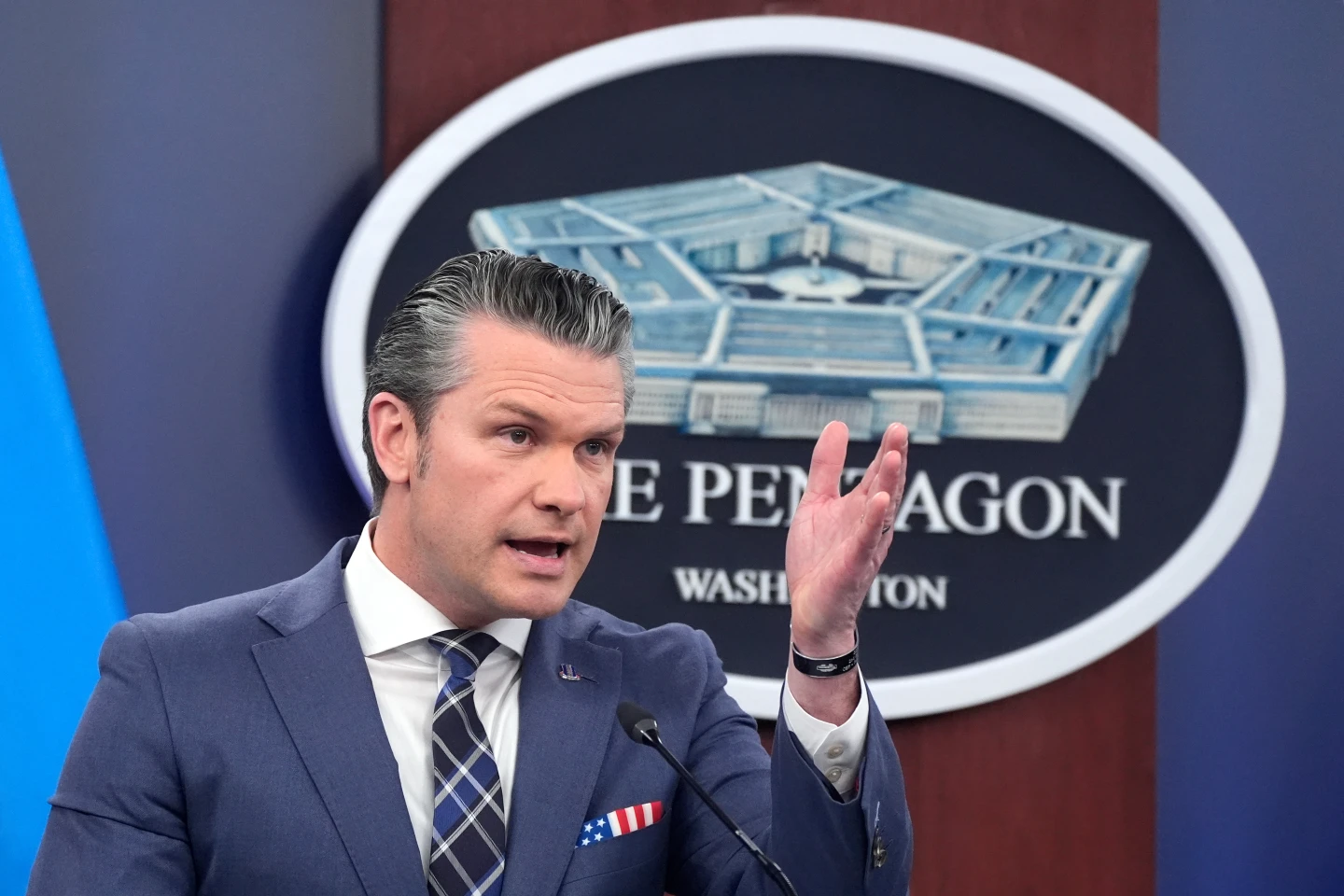
Hegseth’s language has gained new significance following the escalation of conflict between the U.S. and Iran, amid warnings regarding his potential influence on military culture. At a recent Pentagon press briefing, he stated, “The mullahs are desperate and scrambling,” before citing Psalm 144, a shared passage among Jews and Christians: “Blessed be the Lord, my rock, who trains my hands for war and my fingers for battle.”
Previously, Hegseth has defended the Crusades, a series of controversial medieval wars between Christians and Muslims. In his book, “American Crusade,” he asserts that Western civilization owes its existence to these conflicts. His personal tattoos feature motifs from crusader iconography, reinforcing his ideological stance.
Critics like Matthew D. Taylor from Georgetown argue that Hegseth’s rhetoric can exacerbate fears and animosities towards the U.S. among Iranian leaders. “The U.S. voluntarily going to war against a Muslim country under Hegseth’s leadership is the scenario I warned about,” he mentioned.
Responding to inquiries about the intertwined religious contexts of current military actions, a Defense Department spokesperson referenced a CBS interview where Hegseth indicated the importance of faith, describing the war as a confrontation with “religious fanatics.”
Allegations of Prophetic Claims Unverified
Several evangelical leaders believe that the current conflict aligns with biblical predictions of Armageddon. Christian Zionist pastor John Hagee remarked, “Prophetically, we’re right on cue,” while others within Hegseth’s church community hold differing beliefs regarding such prophecies.
Hegseth's visions extend to reforming the military chaplain corps, advocating for a return of religious focus in spiritual care provided to troops. Concerns have been raised about how this may alienate service members of diverse beliefs and backgrounds.
As head of the armed forces, Hegseth has enacted policies reflective of his Christian worldview, including banning transgender military personnel and limiting diversity initiatives. Amidst these changes, critics assert that this encroachment of Christian nationalism threatens the diversity and integrity of U.S. military values.