In brief
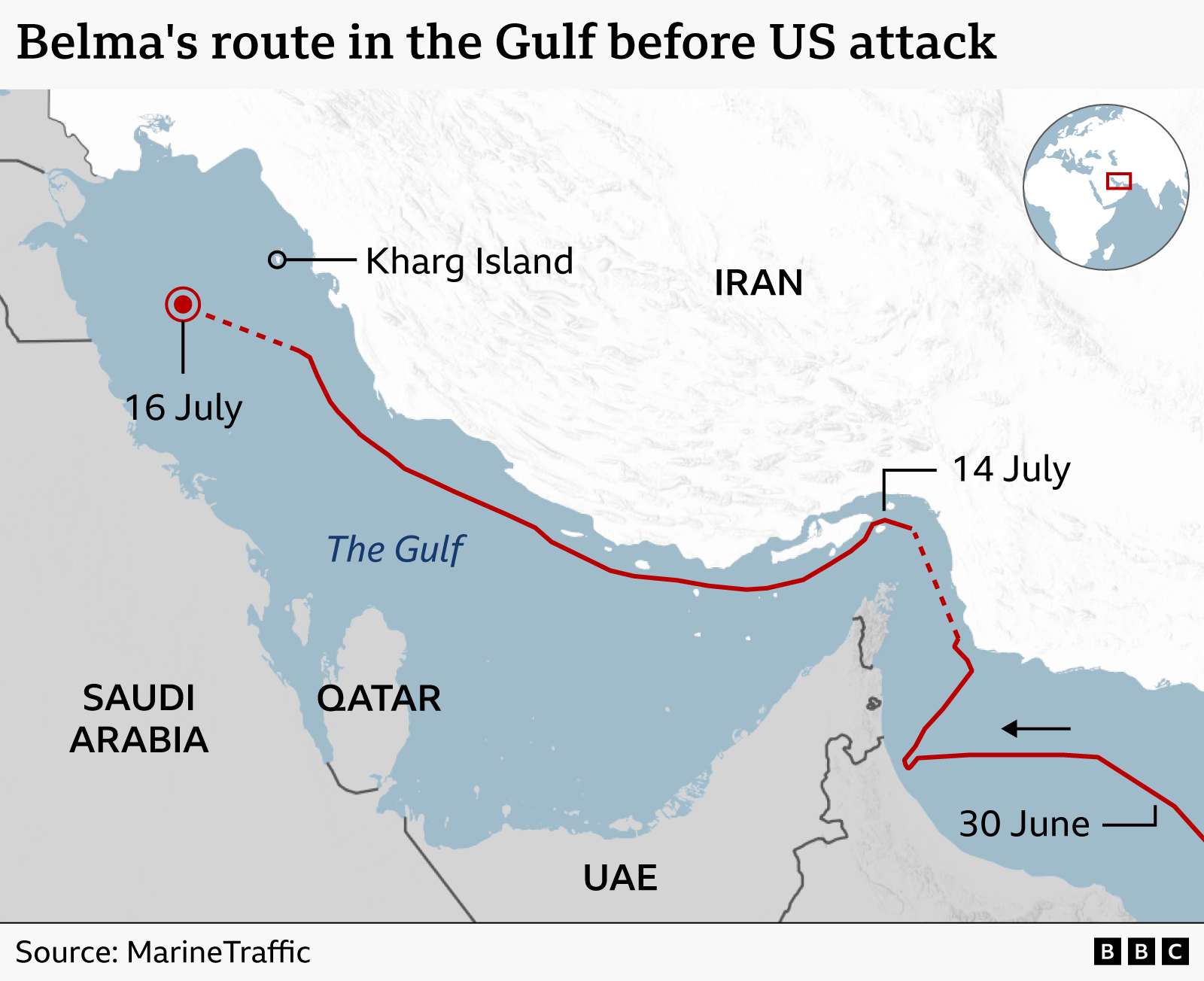
US forces fired Hellfire missiles at the oil tanker Belma, which had entered the Gulf of Oman and was bound for Iran’s Kharg Island terminal, after it ignored multiple warnings from USS Bremerton. The strike occurred on 16 July 2026, amid a renewed blockade of Iranian ports reinstated by President Trump on 13 April. The blockade had been lifted following a ceasefire in mid‑June, but was re‑imposed after a series of Iranian attacks on commercial vessels in the Strait of Hormuz. Analysts estimate Iran exported about 74 million barrels of oil during the brief window of re‑openings, worth more than $6 billion.
US forces strike the oil tanker "Belma" in the Gulf
US Central Command announced on Wednesday that the missile‑armed ship had ignored several warning orders and was heading for the Kharg Island oil terminal. Helicopter‑borne Hellfire missiles were launched at the tanker’s smokestack, disabling the vessel and forcing it to return to the Gulf of Oman.
President Donald Trump reinstated a naval blockade of Iranian ports on 13 April in response to a wave of Iranian attacks on commercial vessels in the Strait of Hormuz and a series of US‑Iran retaliatory strikes. The blockade had been lifted during the ceasefire signed on 17 June, but the recent re‑application of sanctions and blockage came after Iran resumed hostile actions in the region.
The Belma entered the Gulf on Tuesday following its passage through the Strait of Hormuz. Prior to the strike it reported no cargo and had last broadcast its position about 100 kilometres south‑east of Kharg Island on Thursday.
Another US‑sanctioned crude oil tanker, Fuyao, reversed course after the blockade was re‑imposed, returning to Iranian waters in the Gulf of Oman. It is uncertain whether the change was a direct response to the blockade enforcement.

During the brief window of the ceasefire, Iran exported roughly 74 million barrels of oil, a value estimated at over $6 billion, according to United Against Nuclear Iran and TankerTrackers.com. The sale of Iranian oil has now been curtailed again after Iran carried out a series of attacks on ships in the Strait of Hormuz. The US has re‑issued temporary licences to allow limited Iranian oil sales, but these have been tightened as tensions rise.
The ongoing conflict in the region evidences the delicate balance between geopolitical strategy and commercial shipping, with naval assets in the Gulf now tightly monitored by both sides.