In brief
Donald Trump has issued two new executive orders that expand the criteria for who can automatically claim U.S. citizenship at birth and ban the practice of parents traveling to the U.S. specifically to give birth. The measures target parents who are members of foreign terrorist groups, foreign government employees, or have employed fraud to acquire citizenship, and also seek to prevent birth tourism that yields hundreds of thousands of new citizen births each year. Legal experts argue that while the administration may curb entry for such parents, it cannot retroactively strip citizenship from a child already born in the U.S. The move comes after the Supreme Court upheld birthright citizenship in 2026, spurring Trump’s push to restrict the policy further.
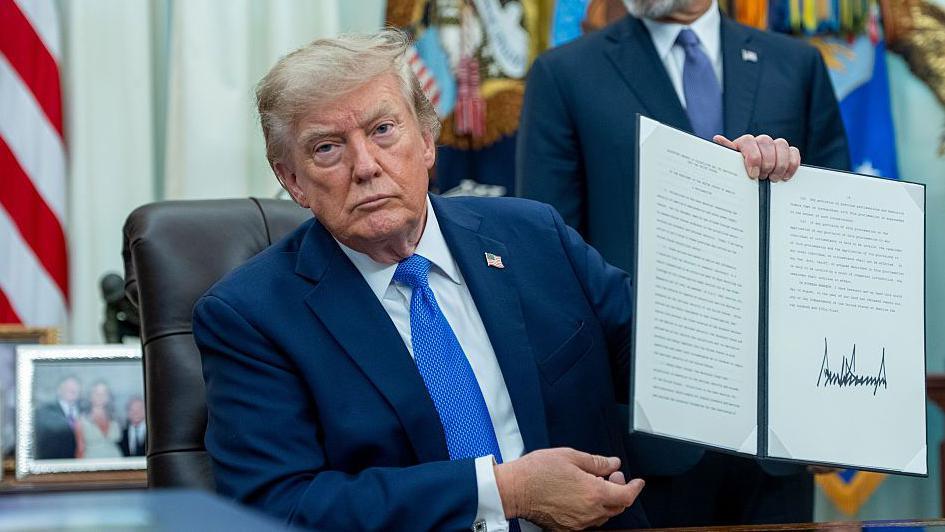
Donald Trump announced on Thursday that he had signed two executive orders in the Oval Office, both aimed at tightening rules around birthright citizenship and attacking the practice of birth tourism.
The first order expands the list of non-citizens whose children, when born in the United States, are automatically denied U.S. citizenship. It specifically excludes children born to parents who are members of foreign terrorist groups, hold positions as foreign government employees, have tried to fraudully obtain U.S. citizenship, or who live in U.S. territories where citizenship is not granted by federal statute.
The second order declares “birth tourism” illegal. In this context birth tourism refers to pregnancies carried by foreign mothers who travel to the United States with the intention of giving birth and thereby conferring automatic citizenship on their child. Trump’s press release said the administration has long warned against the practice and accused rivals such as Russia and China of using it as a means of infiltrating the U.S. with child citizens who will later receive benefits and voting rights.
Trump’s remarks at the meeting were harshly critical of the Supreme Court’s June 2026 ruling that overturned the 2025 constitutional challenge to the 14th Amendment’s birthright citizenship provision. “The decision was a bad decision, very unfair decision,” he said, adding that “our country suffers because of it” and that “we’re ending in a different way.”
Legal scholars caution that while the administration may use its immigration powers to prevent individuals from traveling primarily for the purpose of giving birth to a child in the U.S., it cannot retroactively strip citizenship from a child already born on American soil. Professor Gabriel Chin of the University of California, Davis, explained that the president’s orders might face constitutional challenges, noting that birthright citizenship is an established legal right that embodies the promise of the 14th Amendment.
According to the Migration Policy Institute, the most expansive census-based estimate of birth tourism births ranges from 22,000 to 26,000 babies per year in the United States. Official figures from 2024 recorded 9,600 births to mothers with foreign addresses. This spectrum demonstrates that while birth tourism is a relatively small portion of the total births—estimated at a fraction of millions—Trump believes the number is significant enough to warrant new restrictions.
With these orders, Trump hopes to create a stricter regulatory environment that limits certain foreign-born families from having U.S. citizen children. The legal community will likely monitor how American courts respond, especially after the Supreme Court’s 2026 affirmation of the 14th Amendment’s birthright citizenship rights.