The Unfolding Scenario: Trump's Aspirations for Greenland
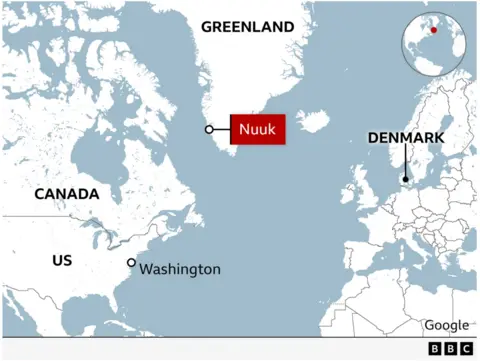
Donald Trump is adamant about exploring possibilities regarding Greenland, with the White House confirming that military and economic options remain on the table.
Analysts warn that while a military operation could be executed swiftly, it presents a nightmare scenario for NATO and would breach international laws, given that Denmark is Greenland's protector.
Trump has emphasized Greenland's significance for US national security, citing unsubstantiated claims regarding foreign naval presence. Experts from US, UK, and Denmark are examining various strategies the administration could adopt, stressing political justifications for any course of action.
Military Action
Defense analysts propose that a rapid operation to secure Greenland's takeover might not face substantial resistance due to the island's sparse population of around 58,000. The area is defended primarily by Danish units with limited capabilities.
Despite initial assessments suggesting that US military operations could swiftly address the territorial ambitions, former officials argue any military venture would heavily strain US-European relations. With Denmark being a NATO ally, initiating such actions could tear apart longstanding relationships rooted in international law.
Prospects of Purchase
Contrary to Trump's preference for a military solution, many suggest that outright purchase of Greenland is logistically complex and politically challenging due to opposition from both the Greenlandic population and necessary governmental approvals.
Most recent polls indicate that while the Greenland population leans toward eventual independence from Denmark, the majority is not inclined to join the US, further complicating the administration's strategy.
Influence Over Military Action
Geostrategy experts posit that rather than pursuing military action, a campaign to foster independence sentiments among Greenlanders could yield better results for Trump. This could lead to a partnership arrangement that aligns geopolitical interests while averting conflict.
As the conversation evolves, analysts caution against Trump's inclination toward aggressive tactics, emphasizing the significant opposition such a strategy would encounter within Congress and the international community.
The enduring question lingers: will Trump find ways to navigate the complexities of international law and public sentiment surrounding Greenland, or will his ambitions lead to unwarranted escalations?