The ants are flying in Kenya at the moment. During this rainy season, swarms can be seen leaving the thousands of anthills in and around Gilgil, a quiet agricultural town that has emerged as the center of a booming illegal trade. The mating ritual sees winged males leave the nest to impregnate queens, which also take flight at this time. This makes it the perfect time to chase down queen ants to sell on to smugglers at the heart of a growing global black market.
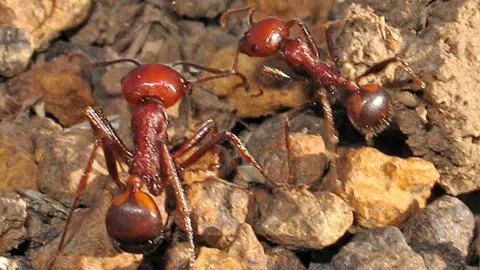
It is the giant African harvester ant queens, which are large and colored red, that are most prized by international collectors – one can fetch up to £170 ($220) on the black market, primarily operating online. A single fertilized queen can create a whole colony and can live for decades, easily transported without detection at customs due to scanners typically overlooking organic materials.
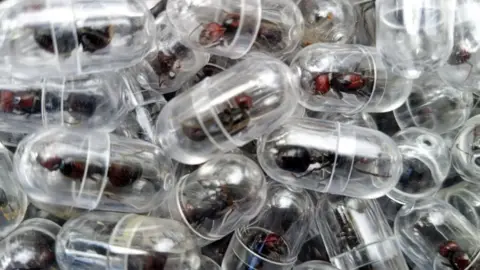
A man who acted as a broker, linking foreign buyers with local collection networks, shared, At first, I did not even know it was illegal. He noted that ants were collected near open fields, usually early in the morning. The collection process involved bringing the ants to awaiting foreign buyers in guesthouses or cars, packed in small tubes supplied by the buyers.
In recent incidents, the scale of this illicit trade became stark when 5,000 queen ants were discovered alive in a guesthouse. The individuals involved hailed from Belgium, Vietnam, and Kenya and had planned to smuggle the ants to Europe and Asia. Conservationists are now raising alarms about the ecological implications of such practices.
Dino Martins, a local biologist, indicated that such activities threaten the biodiversity of the region's ecosystems. As keystone species, harvester ants are crucial for seed dispersal and maintaining healthy grassland. Experts are calling for stricter trade protections under international treaties like CITES, especially as the trade remains largely unmonitored, making it hard to gauge its true scale.
While it's possible to legally collect ants in Kenya with the right permits, these are rarely applied for. The Ministry of Environment, along with the Kenya Wildlife Service, recognizes the potential economic value of sustainable ant harvesting, as the ants can be bred and farmed, providing a viable commercial opportunity without threatening local ecosystems. The debate surrounding the environmental conservation versus commercial exploitation of this unique wildlife trade continues as Kenya looks to regulate such emerging markets.
It is the giant African harvester ant queens, which are large and colored red, that are most prized by international collectors – one can fetch up to £170 ($220) on the black market, primarily operating online. A single fertilized queen can create a whole colony and can live for decades, easily transported without detection at customs due to scanners typically overlooking organic materials.
A man who acted as a broker, linking foreign buyers with local collection networks, shared, At first, I did not even know it was illegal. He noted that ants were collected near open fields, usually early in the morning. The collection process involved bringing the ants to awaiting foreign buyers in guesthouses or cars, packed in small tubes supplied by the buyers.
In recent incidents, the scale of this illicit trade became stark when 5,000 queen ants were discovered alive in a guesthouse. The individuals involved hailed from Belgium, Vietnam, and Kenya and had planned to smuggle the ants to Europe and Asia. Conservationists are now raising alarms about the ecological implications of such practices.
Dino Martins, a local biologist, indicated that such activities threaten the biodiversity of the region's ecosystems. As keystone species, harvester ants are crucial for seed dispersal and maintaining healthy grassland. Experts are calling for stricter trade protections under international treaties like CITES, especially as the trade remains largely unmonitored, making it hard to gauge its true scale.
While it's possible to legally collect ants in Kenya with the right permits, these are rarely applied for. The Ministry of Environment, along with the Kenya Wildlife Service, recognizes the potential economic value of sustainable ant harvesting, as the ants can be bred and farmed, providing a viable commercial opportunity without threatening local ecosystems. The debate surrounding the environmental conservation versus commercial exploitation of this unique wildlife trade continues as Kenya looks to regulate such emerging markets.