In brief
Slovenia has become the first country in the European Union to introduce fuel rationing, limiting private motorists to 50 litres of fuel daily amid rising prices influenced by international tensions. Businesses and farmers receive a higher allowance, and restrictions are expected to be enforced by local petrol stations. The government is also urging retailers to limit fuel purchases for foreign drivers as 'fuel tourism' from neighboring countries surges due to price disparities.
Slovenia has become the first EU member state to implement fuel rationing to tackle disruptions caused by the US-Israeli strikes on Iran and its retaliation on their allies in the Gulf - most major players in world energy markets.
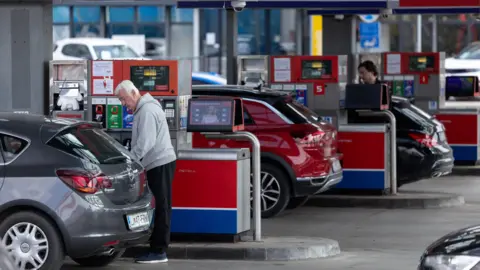
Many countries have been experiencing steep hikes in fuel prices. In Slovenia, this has resulted in so-called 'fuel tourism', as drivers from neighbouring countries, particularly Austria, take advantage of the lower, regulated prices here.
Under the new measures, private motorists in Slovenia will be restricted to a maximum purchase of 50 litres of fuel per day, while businesses and farmers have a more generous allowance of 200 litres.
Some fuel retailers had already imposed measures of their own. Hungary's MOL, which operates petrol stations across the region, had already imposed a 30-litre limit.
Prime Minister Robert Golob reassured the public about fuel availability, stating that there are sufficient supplies and no impending shortages. However, the new restrictions will be monitored by petrol station employees to ensure compliance.
The government encourages fuel retailers to impose stricter limits for foreign drivers as prices in neighbouring Austria approach €1.80 per litre, while Slovenia's prices remain more stable, currently around €1.47.
Reports from locals illustrate growing concern, with some questioning if their country is 'at war' over fuel shortages. Others see the crossing of foreign drivers as a disruption to local supply.
As fuel prices remain high, the influx of 'fuel tourists' from Austria will likely continue, raising discussions about the regional economic impacts and the need for ongoing regulatory measures.