In brief
Hours after President Trump announced an energy ceasefire with Russia, Ukrainian President Volodymyr Zelensky said Russian forces attacked six energy sites, including gas stations and power infrastructure. The strikes caused blackouts in Izyum, Kharkiv, Donetsk and Zaporizhzhia, and Ukraine’s grid operator warned of new power cuts. Russian Foreign Minister Sergei Lavrov openly dismissed the ceasefire, while various European leaders expressed mixed support. Russian attacks have intensified on both sides, challenging the ceasefire’s effectiveness. The situation escalates as US and European allies weigh their responses.
After President Donald Trump announced an energy ceasefire between the United States and Russia, Ukraine’s president Volodymyr Zelensky said Russian forces struck six energy sites within hours of the declaration.
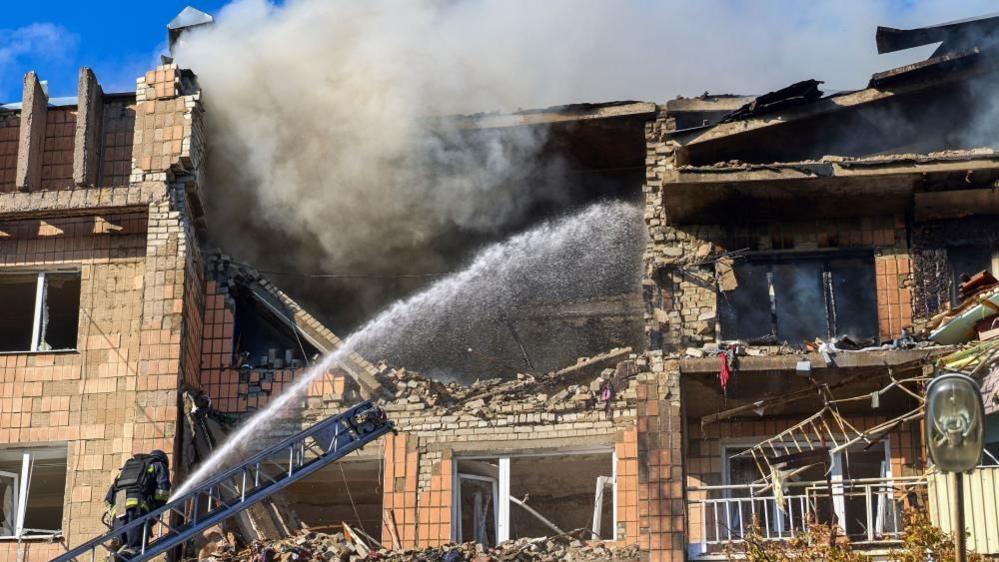
According to Ukrainian officials, the attacks targeted gas stations, power grids and other vital infrastructure, leading to blackouts in Izyum and further damage in Kharkiv, Donetsk and Zaporizhzhia.
Ukrenergo, Ukraine’s state grid operator, warned of new power cuts across the country in order to avoid overloading already damaged equipment.
In response, Russia’s Foreign Minister Sergei Lavrov criticised the ceasefire, stating that Ukraine does not deserve the respite hoped for by the agreement.
Despite the truce’s intentions, Zelensky described the strikes as proof that Russia would not honor the agreement and called the attacks a “disorderly response” to Trump’s call.
Washington has offered to support the ceasefire, with Trump explaining that the agreement is a step toward ending the war, while European leaders such as the UK, France, Canada and the EU have voiced support, though the EU’s Kaja Kallas remains cautious about the truce’s feasibility.
Russia’s attacks are part of a broader escalation, with data from BBC Verify showing a doubling of strikes on Russian‑controlled facilities in 2026 compared to 2025. Meanwhile, global conflict monitors record increased Russian attacks on Ukraine’s energy network this year.
Trump’s energy ceasefire claim comes amid a broader push to keep oil flowing, with his administration proposing the import of Russian diesel into the United States—a move criticized by Zelensky as a “gift” to Vladimir Putin.
The worsening situation highlights the fragile nature of the proposed ceasefire and the ongoing clash over energy as a focal point of the larger conflict.