In brief
Singapore is adapting to rising energy prices triggered by the Iran war by requesting government employees to raise office air conditioning temperatures and invest in energy-efficient technologies. This initiative reflects a broader regional trend, as Southeast Asian nations wrestle with energy constraints and seek to enhance conservation efforts.
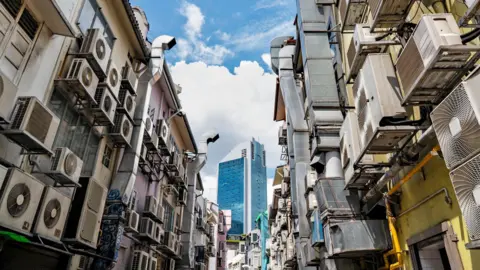
Singapore - infamous for its widespread use of air-conditioning - has told government employees to bring up the temperature in offices to at least 25C (77F) as it grapples with rising energy prices caused by the Iran war. The city-state's public offices will also install power-efficient technology like LED lights and smart sensors to help conserve energy. Singapore joins other countries in South East Asia that have taken steps to save energy, like Thailand, which also asked people to keep air conditioners at 26-27C. The region is heavily reliant on oil and gas shipments that pass through the Strait of Hormuz, which has been effectively shut since the war began. In 1999, Lee Kuan Yew, widely seen as the founding father of modern Singapore, famously credited air-conditioning with having 'changed the lives of people in tropical regions' by enabling work indoors despite the heat outside. Today, there are very few offices in the country without air-conditioning - though some will argue that its use tends to be quite excessive. Singapore's Ministry of Sustainability and the Environment said on 8 April that the government was 'taking the lead' in its energy-saving effort as the Iran war has hit global fuel supply chains. Workers are also being urged to switch to fans and take public transportation to cut the use of fuel.