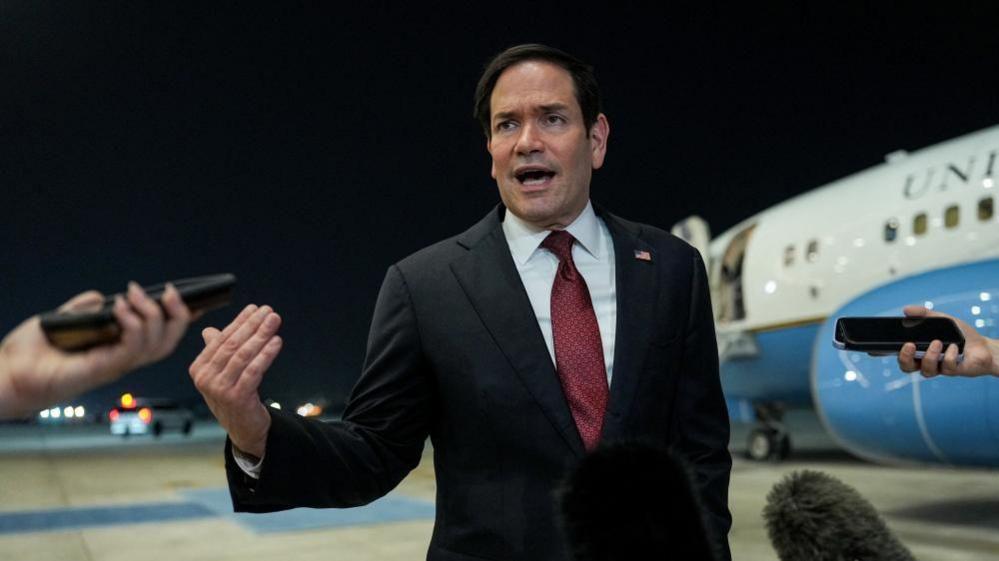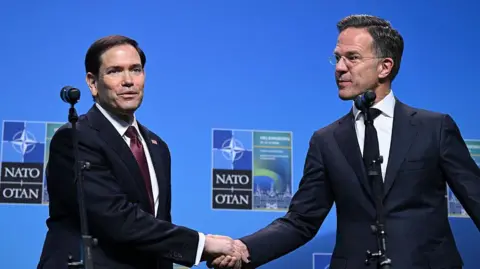
US Secretary of State Marco Rubio has urgently addressed NATO allies' growing concerns over America's shifting European military posture, following President Donald Trump's confusing series of troop announcements. Speaking at a press conference in Sweden after the NATO foreign ministers' meeting, Rubio acknowledged the confusion surrounding recent decisions that left partners 'not always easy to navigate.'
The turmoil began with Trump's Thursday announcement to send 5,000 additional US troops to Poland—a move that followed the abrupt cancellation of a prior 4,000-troop deployment to the same country and the withdrawal of 5,000 troops from Germany. Rubio explained these adjustments were part of a 'constant reevaluation' of US military commitments across Europe to balance priorities with global responsibilities, particularly amid the Middle East conflict with Iran. 'It is well understood in the alliance that the United States troop presence in Europe is going to be adjusted,' he stated, adding that the work was 'already ongoing and done in coordination with our allies.'
Swedish Foreign Minister Maria Malmer Stenergard echoed the unease, noting the contradictory moves created 'confusion indeed.' Yet Rubio insisted the US remained 'not saying they're going to be thrilled about it' but 'certainly aware' of allies' concerns. The remarks came hours after Trump cited his personal relationship with Polish President Karol Nawrocki—a key supporter of his election campaign—as the justification for the troop surge.
The confusion intensified diplomatic tensions. While Trump maintained the additional troops would be 'independent' of the cancelled Poland deployment, it remains unclear whether the 5,000 were part of the withdrawn German contingent or a separate operation. NATO Secretary General Mark Rutte warned that Europe is moving toward a future where it 'becomes less reliant on the US,' though Rubio stressed: 'I understand NATO is valuable to Europe, and it should be. It also has to be valuable to the United States.'
This marks a pivotal moment for transatlantic security. The US maintains over 36,000 troops in Germany—the largest NATO contingent—alongside significant deployments in Italy, the UK, and Poland. Yet under Trump's 'America First' agenda, there's increasing pressure to reduce European presence. As allies grapple with the implications for Ukraine security, Rubio's reassurances aimed to stabilize the alliance amid fears of a 'strategic drift' in the world's largest security partnership.}
The turmoil began with Trump's Thursday announcement to send 5,000 additional US troops to Poland—a move that followed the abrupt cancellation of a prior 4,000-troop deployment to the same country and the withdrawal of 5,000 troops from Germany. Rubio explained these adjustments were part of a 'constant reevaluation' of US military commitments across Europe to balance priorities with global responsibilities, particularly amid the Middle East conflict with Iran. 'It is well understood in the alliance that the United States troop presence in Europe is going to be adjusted,' he stated, adding that the work was 'already ongoing and done in coordination with our allies.'
Swedish Foreign Minister Maria Malmer Stenergard echoed the unease, noting the contradictory moves created 'confusion indeed.' Yet Rubio insisted the US remained 'not saying they're going to be thrilled about it' but 'certainly aware' of allies' concerns. The remarks came hours after Trump cited his personal relationship with Polish President Karol Nawrocki—a key supporter of his election campaign—as the justification for the troop surge.
The confusion intensified diplomatic tensions. While Trump maintained the additional troops would be 'independent' of the cancelled Poland deployment, it remains unclear whether the 5,000 were part of the withdrawn German contingent or a separate operation. NATO Secretary General Mark Rutte warned that Europe is moving toward a future where it 'becomes less reliant on the US,' though Rubio stressed: 'I understand NATO is valuable to Europe, and it should be. It also has to be valuable to the United States.'
This marks a pivotal moment for transatlantic security. The US maintains over 36,000 troops in Germany—the largest NATO contingent—alongside significant deployments in Italy, the UK, and Poland. Yet under Trump's 'America First' agenda, there's increasing pressure to reduce European presence. As allies grapple with the implications for Ukraine security, Rubio's reassurances aimed to stabilize the alliance amid fears of a 'strategic drift' in the world's largest security partnership.}