In brief
The recent Kiteezi landfill tragedy in Uganda has left communities in mourning as they grapple with the loss of friends and family members. While 30 lives were lost, survivors are calling for accountability and structural reforms to prevent such disasters in the future.
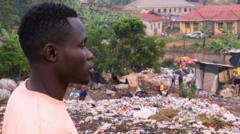
Fighting back tears, Okuku Prince, a 22-year-old rubbish collector in Kampala, recalls the heartbreaking moment he discovered his best friend, Sanya Kezia, buried under debris at the Kiteezi dump, where a landslide last August claimed 30 lives. "I think some people are still underneath the garbage," he laments.Many individuals, like Kezia, relied on scavenging discarded items for survival, from fishing nets to plastic bottles. Following the tragedy, a blame-game ensued between Kampala's city council and the central government, each accusing the other of negligence while the deceased still lie beneath layers of refuse, denied proper burials.When Kezia’s body was eventually located, it was found badly disfigured, a nightmare for the grieving Prince. “We’re not safe here. Unless they repair it, people are not safe,” he expresses, reflecting on how this disaster forced him to abandon his studies in law.Uganda faces soaring youth unemployment rates, compelling many to turn to hazardous jobs. “I make 10,000 shillings [around $2.70] a day collecting plastic bags,” shares Mr. Prince, whose life was once filled with academic pursuits.After the collapse, he was forced to relocate from his home near the dump due to safety fears, even as hundreds of others displaced from rescue operations await compensation from local authorities.Dr. Sarah Karen Zalwango, the new head of public health at the Kampala Capital City Authority (KCCA), acknowledges that repairs and budget assessments are pending. Critics argue that the danger was long foreseen; “You can't take all that waste to one site,” remarks urban planner Frank Muramuzi, stressing the importance of proper waste management protocols.The Kiteezi landfill, opened in 1996, has struggled to handle Kampala’s growing waste, which now averages 2,500 tonnes daily. Its outdated infrastructure lacks essential recycling and sorting facilities, leaving it vulnerable to infrastructure failures, particularly after heavy rainfall.As local authorities work to develop new waste management strategies, Prince and the other survivors continue to suffer the consequences of negligence. “They promised us compensation, but I haven't received anything; almost everyone is complaining,” he urges, echoing the despair of those grieving losses at Kiteezi.Ultimately, the responsibility for maintaining a safe environment rests with the KCCA, yet Mayor Erias Lukwago notes that insufficient power and funding from the central government have hampered necessary changes. Meanwhile, President Yoweri Museveni acted by removing senior KCCA officials in light of the incident, signifying the depth of political strife entwined with the crisis. As planning for reforms begins, communities remain anxious for meaningful improvement, acutely aware of their own vulnerability in a system that must prioritize the health and safety of its citizens.