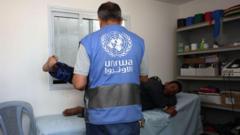
In brief
The Israeli parliament's decision to ban the UN Palestinian refugee agency (UNRWA) from operating is poised to disrupt crucial aid for millions in Gaza and the West Bank. While Israel cites concerns over ties to Hamas following the October attacks, UNRWA has played a vital role in providing humanitarian support and education to Palestinian refugees since its inception in 1949. The new law may complicate the agency's operations, risking worsening conditions for vulnerable populations reliant on its services.
Israel's parliament has recently passed a law that prohibits the United Nations Relief and Works Agency for Palestine Refugees (UNRWA) from functioning within Israel and occupied East Jerusalem. This decision effectively restricts all forms of communication between UNRWA employees and Israeli officials, significantly undermining the agency's capacity to operate in Gaza and the occupied West Bank, where most of Gaza's over two million residents depend on its assistance. UNRWA has publicly condemned this new legislation, warning that it could precipitate a breakdown in aid supply chains in the upcoming weeks.The Israeli government defends the ban, citing allegations that some UNRWA staff engaged in activities linked to Hamas's October 7 attacks, which resulted in over 1,200 deaths. However, the tensions between Israel and UNRWA date back many years, with the agency established in 1949 to support the 700,000 Palestinians displaced by the formation of Israel. Today, it employs around 13,000 individuals across Gaza and is instrumental in delivering humanitarian assistance, operating schools, medical facilities, and providing shelter.UNRWA has been accused by Israel of perpetuating the refugee status of Palestinians through its policies, which allow generations of families to inherit refugee status. Israel argues this fosters unrealistic hopes for a right of return to now Israeli territories. Educational materials used by the agency have also faced scrutiny, with accusations that they promote anti-Israel sentiments, leading some Western nations to condition support on curriculum revisions.The decision to ban UNRWA has been intensified post the Hamas attacks, with Israel asserting that a significant number of its staff have affiliations with terrorist groups. Following this environment of suspicion, around 16 Western countries halted their funding to the agency. Although investigations led to some dismissals within UNRWA, Israel has been challenged to provide concrete evidence for its broader allegations. In practice, the ban disrupts vital operations as UNRWA relies on coordination with Israel to move aid through checkpoints. Without access to Israeli officials, the agency's ability to deliver assistance in Gaza—an area where it oversees the majority of aid distribution—will be severely compromised. International leaders, including those from the UN's World Food Programme, have stressed the indispensable role of UNRWA in ensuring food and medicine reach those in need.Despite the ban, Prime Minister Netanyahu has pledged that humanitarian aid will continue to be available in Gaza, yet the US State Department emphasizes that Israel needs to take further steps to facilitate aid access, following indications of military aid repercussions if improvements aren't made. The fate of millions of Palestinians now hangs in a delicate balance as international efforts to address the growing humanitarian crisis unfolds.