In brief
Israeli soldiers blew up the homes of Ahmad and Hammouda al‑Jaabeh on the eighth day of a Hebron operation that began after a deadly attack. The demolition has added to a wave of displacement, detentions and protests, with Israeli authorities saying they target security while Palestinian sources describe it as collective punishment.
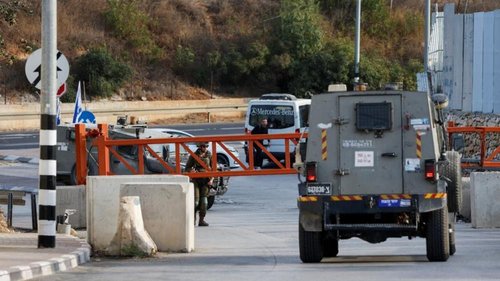
In the southern West Bank city of Hebron, Israeli soldiers detonated the homes of Ahmad and Hammouda al‑Jaabeh on Friday, the eighth day of a military offensive that has routed hundreds of families and escalated tensions across the region. The brothers were accused of leading a shooting attack at a checkpoint on 23 October that killed two Israeli soldiers and wounded three others, an incident that prompted the operation’s launch.
Israeli forces described the demolition as part of a proactive and offensive measure to protect residents and thwart further attacks. A statement from the Israeli military said the offtensive would continue to operate in order “to prevent future violence in the West Bank and to protect people in the area.”
According to Palestinian security sources, engineering units surrounded the al‑Jaabeh houses early in the day, sealed the surrounding block, and spent at least nine hours mounting explosives before destroying them. The destruction displaced the brothers’ families and forced other residents in the Deir Baha neighborhood to flee.
Al Jazeera’s Mohammed al‑Atrash, reporting from Hebron, said that when residents tried to approach the site afterward, a large contingent of troops backed by drones entered the area and detained at least twelve Palestinians. He added that some of the detained remain in custody “to this moment.”
“Some of these Palestinians are still being detained up to this moment, and we monitored live on air their abuse at the hands of the Israeli occupation army,” he said.
Israeli forces reportedly seized the entrance to what had been the Ein Deir Bahha neighborhood, turning some homes into military barracks and command centres. The Hebron municipality reported that 4,969 Palestinians from 780 families had been displaced by the offensive, a figure that sharply exceeds the 537 families cited by the Hebron Governorate Emergency Committee.
Alongside the demolitions, H.Israeli troops have detained among them an estimated 120 Palestinians as part of the broader operation, with dozens of others being interrogated. Al‑Atrash said that Israeli officials threatened to accelerate further demolitions in Area C, part of the West Bank under full Israeli control, following measures approved by Finance Minister Bezalel Smotrich after the attack.
On Friday, displaced residents gathered near the closed al‑Jalda roundabout, protesting the siege and demanding the right to return home. The protests included women, children and older people, some of whom were still staying in the nearby al‑Jalda neighborhood, which remains under occupation.
Raed Nairat, an academic and expert on Israeli affairs speaking from Nablus, told Al Jazeera that the operation’s message was clear “from day one.” He described it as effective collective punishment intended to break the Palestinians’ will and impose a price that the brothers might not have agreed to or desired.
At least thirteen businesses near the checkpoint have been demolished, according to Al‑Atrash, adding to a sense that the arousal extends beyond residential homes. Protesters called for an end to the siege, while Israeli forces continued to maintain a heavy presence in the area to prevent further attacks.
The Hebron operation remains a flashpoint in the West Bank, with its eighth day bringing further loss of homes, continued displacement, and heightened scrutiny over the balance between security measures and civilian protection.