Thursday had been earmarked for Australians to mourn the victims of last month's Bondi shootings.
Those who had lost loved ones in the antisemitic attacks wanted it to be a chance to remember the dead, and spread light and kindness in their honour.
Instead, it was a day dominated by a political row resulting in the collapse of the opposition coalition.
I mean, you would have thought they could have put this off for 24 hours, veteran political commentator Malcolm Farr told the BBC.
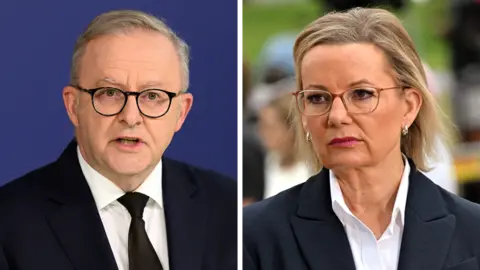
The fight - which centred around reforms sparked by the tragedy - looks set to sink two leaders and trash their parties' electoral chances, and caps off what many Australians say has been a disappointing month of politics.
When two gunmen opened fire on an event marking the Jewish festival of Hanukkah at Bondi Beach, killing 15 people - including a 10-year-old child - the recriminations began almost immediately.
The turnaround was amazing in the way they [politicians] politicised it, says Bondi local Kass Hill, 52. The fingerpointing isn't solving anything.
Heckles and blame
While families were waiting to bury their loved ones, a conveyer belt of politicians - including the opposition leader - visited the scene to apportion blame. Prime Minister Anthony Albanese, accused by many Jewish Australians of ignoring their concerns ahead of the attack, spent the weeks after it dismissing calls for a national inquiry into antisemitism.
As it was after Port Arthur, gun reform was the first thing on the legislative agenda after the Bondi attack. However, Albanese's focus faced immediate backlash as it was regarded as a distraction away from the root causes of the attack.
Demand for immediate action on antisemitism grew, but Albanese argued that announced measures were sufficient. His efforts to combat rising antisemitism and bolster gun reforms have met with mixed reactions, highlighting the deep fractures in Australian societal and political stability.