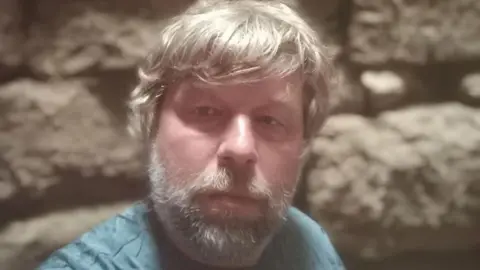
A judge in Poland has ruled that Russian archaeologist Alexander Butyagin can be extradited to Ukraine, although his defense says he will appeal.
Butyagin is being held in a Warsaw prison for allegedly conducting illegal excavations and plundering artefacts from the ancient city of Myrmekion in Crimea - Ukraine's peninsula annexed by Russia in 2014.
If Judge Dariusz Łubowski's ruling is upheld, a final decision on extradition will rest with Poland's justice minister.
Butyagin, arrested in Poland at Ukraine's request in December, denies all the allegations. If convicted, he faces up to five years in jail. Russia has demanded his immediate release, saying the case is politically motivated.
Since Russia's full-scale invasion of Ukraine in 2022, European courts in several instances have refused to extradite Russians to Ukraine, citing the possible risk of violations to the European Convention on Human Rights.
The archaeologist's life and wellbeing would be at risk if he were extradited to Ukraine, Butyagin's lawyer Adam Domański has said.
Butyagin has overseen excavations at Myrmekion since 1999, a site founded in the 6th Century BC. While his research was initially authorized by Ukraine, it continued without Kyiv's consent following the annexation.
He faces up to five years in prison if found guilty of charges related to damaging cultural heritage, which includes illegally taking artefacts worth over $4.5 million.
Before his arrest, Butyagin engaged with audiences in Europe, knowing of a warrant for his arrest issued by a Kyiv court. His work, conducted under the auspices of the Hermitage Museum in St Petersburg, has drawn legal concerns not only from Ukraine but from various European authorities.
Butyagin intends to appeal the extradition ruling as legal debates continue on cultural heritage and the legality of excavations under conditions of military occupation.