In brief
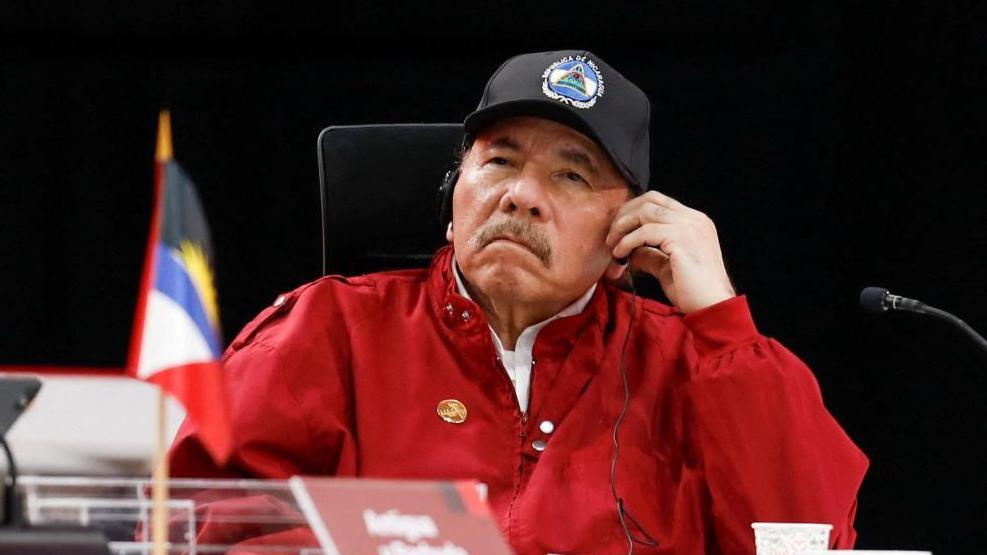
Nicaragua’s National Assembly will decide whether to prohibit opposition parties from participating in future elections, a move that follows President Daniel Ortega’s recent remarks about blocking dissenting forces. The proposal came hours after Ortega warned that “there will be no more elections for them” to seize power. International bodies—including the UN and U.S. officials—have condemned the plan, arguing it violates democratic norms. Ortega’s rule has been marked by political repression, with opposition leaders jailed, exiled, and stripped of citizenship. The opposition’s leaders predict the government aims to transform Nicaragua into a one‑party state.
Spain’s National Assembly Mulls Excluding Opposition from Upcoming Elections
For the first time since the 1979 Sandinista revolution, Nicaragua’s government‑controlled National Assembly is preparing to decide whether to bar opposition parties from future elections.
President Daniel Ortega, who entered office in 2007 and has tightened his grip on the country, issued a warning that “there will be no more elections for them to try to seize power.” He triggered a widespread backlash that has put the country’s political future under the international spotlight.
UN High Commissioner for Human Rights Volker Türk demanded that “people of all political viewpoints must be allowed to vote and run for office,” a stance echoed by U.S. Secretary of State Marco Rubio, who said Ortega’s remarks “lay bare the true authoritarian nature” of his rule.
Ortega’s regime has repeatedly silenced dissent: opposition figures have been jailed, exiled or stripped of citizenship. Since the last presidential election in November 2021, the ruling party has shut the door on rival candidates and pushed a solitary, one‑sided contest re‑electing the president as a move to consolidate power.
In a March 2024 speech marking the Sandinista’s anniversary, Ortega said he would enact laws that could “create a wall to block the coup mongers” and would prevent any foreign funding from swaying the political climate. He specifically targeted parties financed by the United States.
U.S. officials condemned Ortega’s promise, declaring that any such measure would be a violation of a nation’s constitutional right to democratic participation. They further highlighted worries about his wife, Rosario Murillo, whom he described as his “co‑president” in 2025, threatening to render Nicaragua a one‑party dictatorship in the event of a power vacuum.
Gustavo Porras, head of the National Assembly, dismissed external criticism, claiming the lawmakers were “essentially debating how to close even a crack for the opposition.” He suggested that the legislation is designed to lock opposition parties out of the political process.
The supposed changes would extend presidential terms to six years, in a move that might also favour Nur‑Rosario Murillo’s rising influence while limiting the space for democratic voices to emerge.
Opposition figures in exile have decried the new proposal, stressing that it signals a desire to make Nicaragua a one‑party state akin to China, North Korea, and Cuba. Former opposition candidate Felix Maradiaga warned that the plan “shows the leader is afraid of dissent” and acknowledges the ongoing demand for change.