In brief
Last Saturday’s riots in Paris saw widespread looting and vandalism, prompting swift accusations from France’s leaders that far-left groups orchestrated the violence. While some evidence points to opportunistic theft, reports of graffiti and intimidation by groups affiliated with La France Insoumise fuel the blame game. The Macron administration faces scrutiny for security gaps, while political rivals, notably Marine Le Pen, leverage the unrest to rally support. In the wider context, a steep public dissatisfaction with democracy underscores the volatility of the upcoming presidential election.
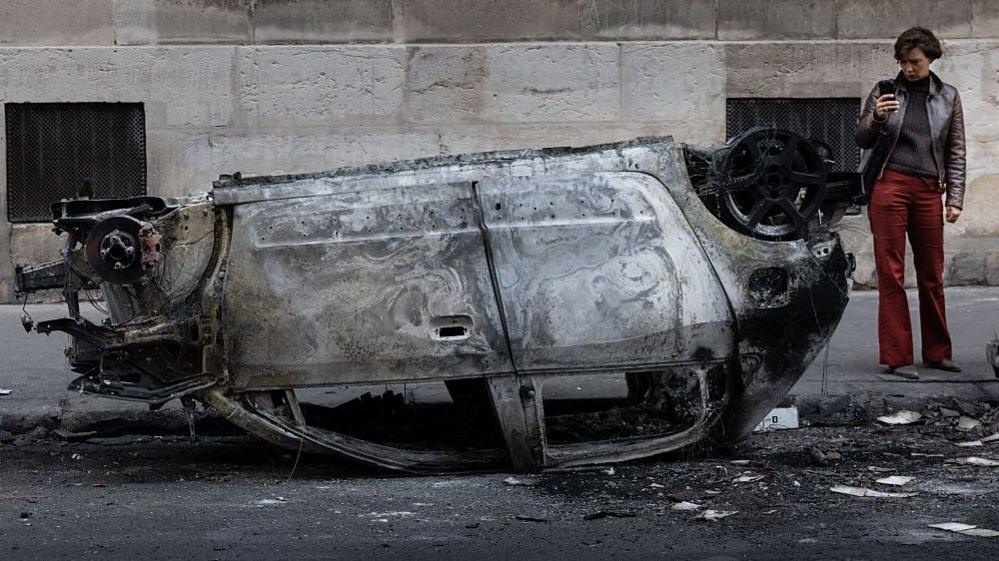
Paris erupted on Saturday as thousands blocked streets, smashed shop windows and set fires, creating a scene that now sees French leaders point fingers at far‑left groups and the state itself for failing to contain the violence.
Who Orchestrated the Chaos?
Recent intelligence briefings revealed graffiti of a black “A”—a symbol tied to anarchist circles—plastered on buildings across the country. Police footage displays young men in black cloaks, using hammers and machetes to strike police vans. While the bulk of looting appears opportunistic, several accounts hint at a pre‑planned agenda.
La France Insoumise (LFI), a radical left party, slammed the accusations, saying the government is scapegoating its supporters in a bid to bolster its electoral standing before the 2027 election. The party denies any role in the unrest.
Government Response and Public Sentiment
Prime Minister Sébastien Lecornu and Interior Minister Laurent Nuñez publicly blamed the “hard left” for “pouring oil onto the fire,” while acknowledging that insufficient police presence on the streets allowed the violence to spiral. President Emmanuel Macron demanded full explanations, vowing that those “responsible for violence or theft” will be brought to justice.
The UN‑reported wave of student protests—originally aimed at demanding better state schooling—has become mired in the larger narrative of national decline. Interviews with students in Saint‑Denis revealed that many coordinated through messaging apps, rejecting the idea that they were mindlessly pushed by politicians.
Political Leverage and Disillusionment
Marine Le Pen’s anti‑immigration National Rally seized the moment to warn that the Macron government has “run out of steam,” suggesting a looming power vacuum. In contrast, LFI’s Jean‑Luc Mélenchon criticized the ruling party’s incompetence, framing the unrest as a symptom of broader systemic failure.
Public trust in democracy remains precarious: a Pew poll reports that 69% of French citizens are dissatisfied with how democracy is functioning. Similar sentiments span Spain, Italy and even the United States.
As France braces for a contentious presidential election in six months, the current unrest underscores a crisis of legitimacy, with young voters and ordinary citizens demanding accountability and protective governance.
The Road Ahead
With investigations underway—social media platforms are working with authorities to trace looters, and police are scrutinising CCTV footage—French officials face mounting pressure to demonstrate control. The outcome of the parliamentary inquiry, spearheaded by the National Assembly, will likely shape the political narrative as the nation contemplates its next leaders.