In brief
Vargas Llosa's work transcended boundaries, exploring themes of power, violence, and culture in Latin America, while his life was colored by political aspirations and personal trials.
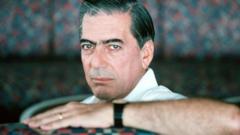
Mario Vargas Llosa, who has passed away at the age of 89 in Lima, Peru, was a monumental presence in the realm of Latin American literature, known not only for his profound storytelling but also for his willingness to tackle controversial themes. Recognized with the 2010 Nobel Prize for Literature, Vargas Llosa produced over 50 notable works, many of which have been translated into multiple languages. His narratives often explored authoritarianism, societal violence, and the complexities of machismo, contributing significantly to the Latin American Boom that brought global attention to the region's literary output.Born in 1936 in Arequipa, Peru, Vargas Llosa had a tumultuous childhood, moving between Peru and Bolivia after his parents separated. His first foray into writing began at a young age, culminating in the 1962 publication of his debut novel, "The Time of the Hero," which sharply critiqued corruption in a military academy and was condemned by the regime. This was followed by the experimental "The Green House," which further established him as a leading voice of his generation.Throughout his career, Vargas Llosa's relationship with other literary giants, notably Gabriel García Márquez, often drew public attention, especially after a notorious physical altercation in 1976. Despite differing political views, including Vargas Llosa's eventual shift towards a more right-leaning ideology, the two authors reconciled later in life, showcasing the complexities of their interactions within the literary sphere.His works have not only been lauded for their narrative power but have also faced criticism, particularly regarding his political pursuits. Running for president of Peru in 1990 on a center-right platform, Vargas Llosa's defeat marked a significant moment in his political career. He continued writing, exposing state violence and power structures, notably in works like "The Feast of the Goat," which examined the dictatorship of Rafael Trujillo in the Dominican Republic.In his later years, Vargas Llosa continued to be a polarizing figure, making headlines for various controversial statements, including comments on feminism and journalism in Mexico. He passed away on April 13, surrounded by family, with his legacy as a formidable titan of literature forever etched in the annals of history. The end of his life marks not only the death of a prolific author but also the conclusion of an era exemplified by the voices of the Latin American Boom.