In brief
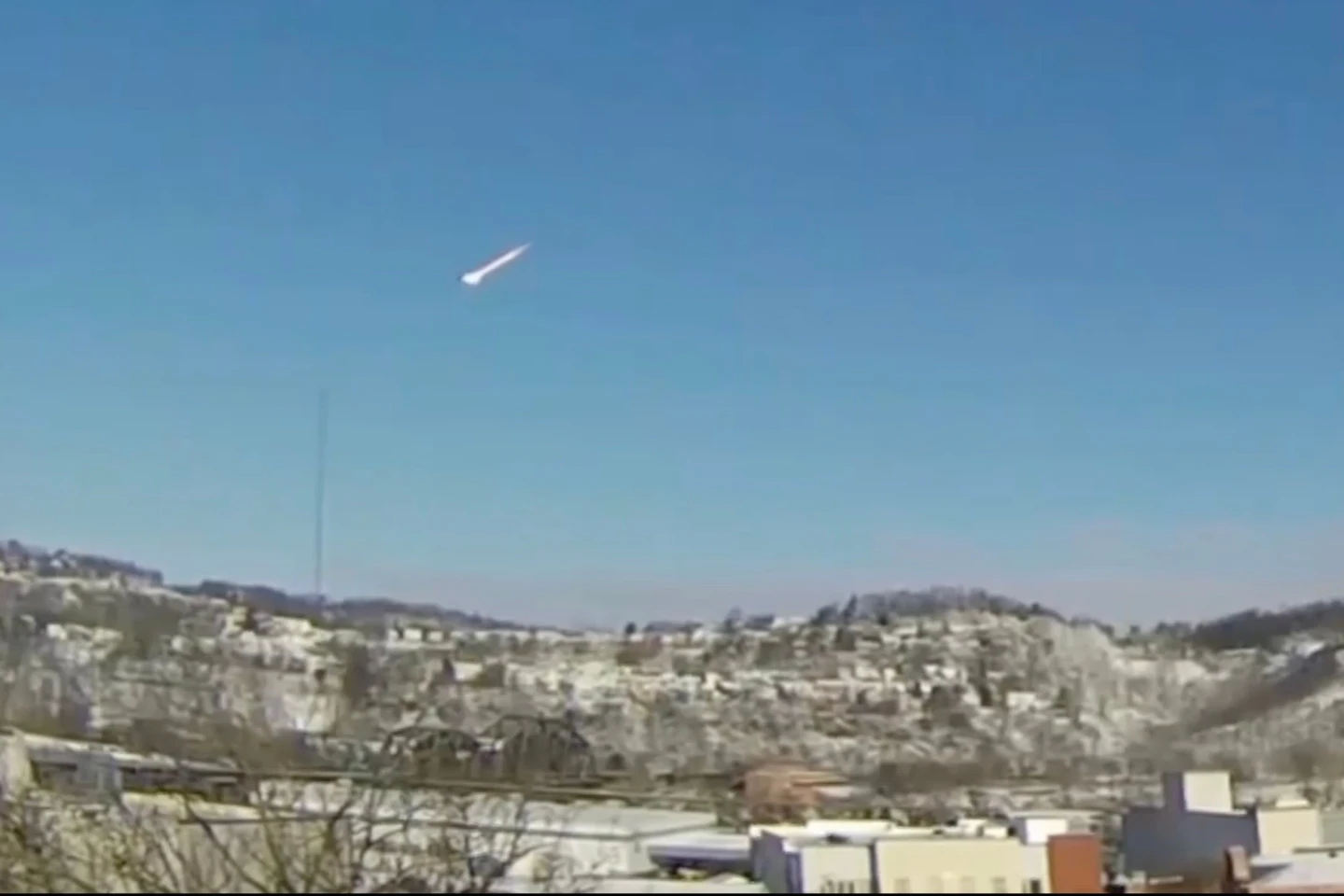
On Tuesday morning, a 7-ton meteor traveling at an incredible speed of 45,000 mph captured the attention of residents in Cleveland and beyond. Reports of the bright fireball reached as far as Wisconsin and Maryland. Astronomers confirmed the meteor's size at nearly 6 feet in diameter and noted that it unleashed energy equivalent to 250 tons of TNT upon breaking apart over Valley City. Although the event startled many, no significant debris was reported to have survived the atmospheric entry.
CLEVELAND, Ohio — A 7-ton meteor that sped through the Cleveland sky at an astonishing 45,000 miles per hour captured the attention of residents and nearby states on Tuesday morning. The bright fireball, which was first observed approximately 50 miles above Lake Erie, broke apart with a thunderous boom, startling those who feared an explosion.Reports poured in from states as far as Wisconsin to Maryland, with witnesses describing the meteor’s brilliance around 9 a.m. The American Meteor Society confirmed that it was indeed a meteor measuring nearly 6 feet in diameter. This one really does look like it’s a fireball, which means it’s a meteorite -- a small asteroid, explained Carl Hergenrother, executive director of the society. Typically, our skies host meteors that fall roughly once per day in the U.S., with smaller pieces of space dust falling even more frequently. The recent meteor was tracked by NASA, which noted that it traveled over 34 miles through the upper atmosphere before fragmenting above Valley City, north of Medina. The explosion released energy equivalent to 250 tons of TNT, as felt by personnel at the National Weather Service in Cleveland, who also reported vibrations from the event. While there is speculation that small fragments might have made it to the surface, most of the meteor likely burned up during its atmospheric descent. There could be some small fragments, but a lot of it would have burned up in the atmosphere, remarked meteorologist Brian Mitchell from the NWS. With meteors becoming more frequently captured on cellphones and security cameras, astronomers are noticing an increase in public interest and evidence of these celestial events. Hergenrother observed, Now we’re seeing them, and there’s dozens of videos popping up all the time.\