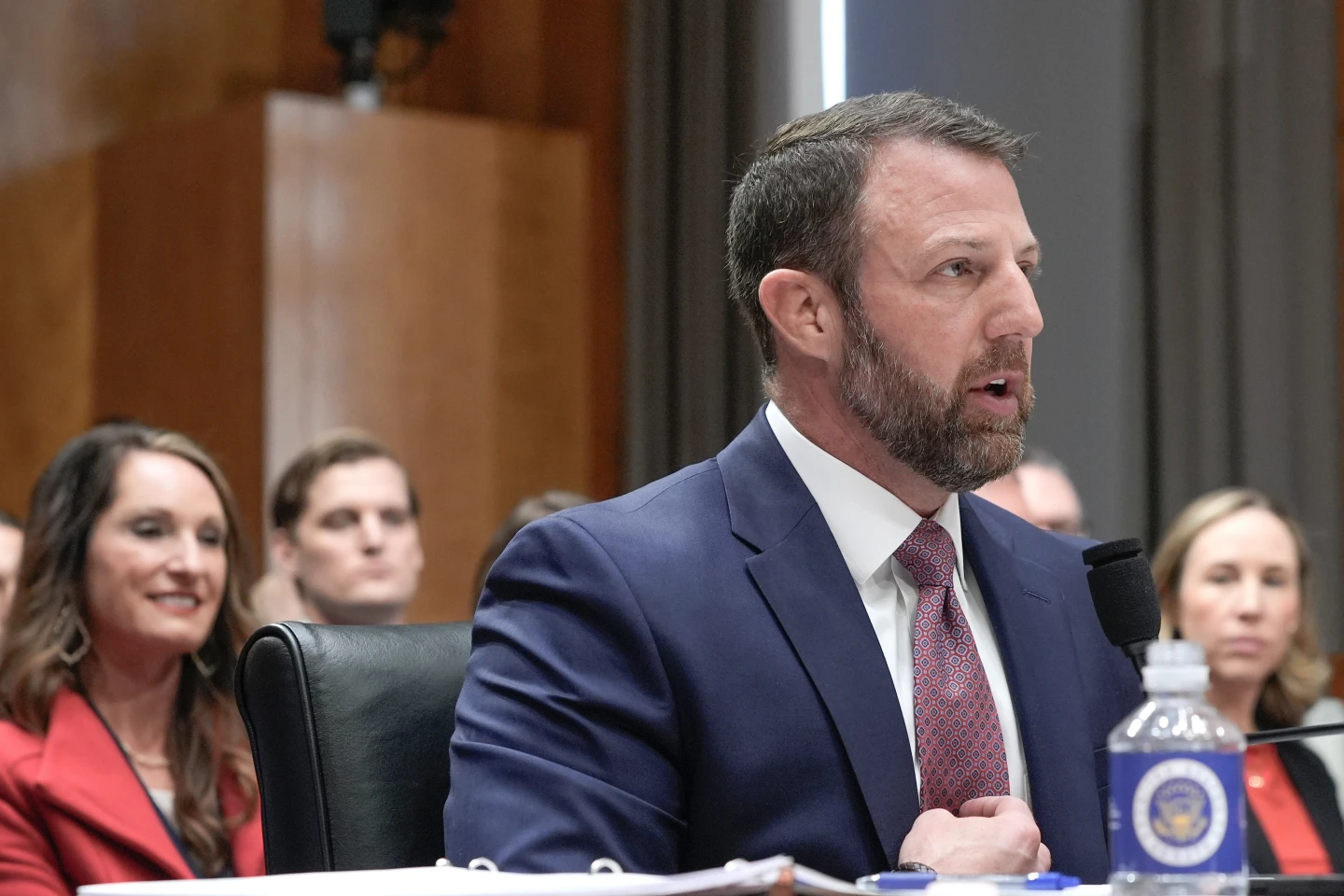
WASHINGTON (AP) — The Senate is on track to confirm Markwayne Mullin as Homeland Security Secretary, the nominee of President Donald Trump, following the dismissal of Kristi Noem amid public discontent over the administration’s immigration enforcement practices.
Mullin, a Republican senator from Oklahoma, has maintained a close relationship with Trump and aims to stabilize the tumultuous department by steering it away from media scrutiny. However, his confirmation hearings revealed tensions with committee chairman Sen. Rand Paul, who critiqued Mullin's character and temperament after a combative exchange.
On Sunday, senators advanced Mullin’s nomination during a rare weekend session, and confirmation is expected later today.
Mullin will take the reins at a time when the Department of Homeland Security is grappling with funding issues that have caused extensive delays at U.S. airports and intensified scrutiny of immigration policies. Democrats are calling for reforms in response to immigration enforcement actions collateral to high-profile incidents this year.
Recently, Trump directed immigration officials to assist the TSA, a move that has caused concerns of escalating tensions in crowded airports.
MMA Fighter Tackles Homeland Security Challenges
Despite extensive congressional experience, Mullin, a former mixed martial arts fighter, has not been heavily involved in immigration matters. His loyalty to Trump secured him the appointment, and he is anticipated to uphold the administration's immigration agenda.
His first major challenge entails restoring routine funding to the department and navigating recent demands from Democrats for more responsibility placed on immigration officers. Issues such as identification without masks, restricting operations near sensitive locations, and requiring warrants for home entry will prominently feature in his agenda.
At his confirmation hearing, Mullin projected an image of a steady hand—that image was, however, challenged throughout the proceedings, especially from committee members skeptical of his alignment with Trump’s directives.
Mullin acknowledged concerns over the methods first adopted under Noem's administration but emphasized that it was the White House that delineates the department's path. As a part of his strategy, he suggested that employing authorized warrants would be necessary for operations, an assertion that may indicate potential shifts in enforcement practices.
Addressing FEMA and Federal Aid Concerns
Mullin will also need to address the ongoing scrutiny at FEMA, which has faced delays in disaster aid due to operational reforms under Noem. Critics assert that her stringent contract approval processes have hindered timely responses to emergencies.
During his Senate confirmation, Mullin advocated for a new direction, rejecting indiscriminate proposals to eliminate FEMA and promising to overturn previous contracting rules. His commitment to restoring balance and efficiency in disaster response aligns with the broader political climate seeking to address public criticisms about government performance on immigration and disaster management.
However, Mullin's trajectory as Homeland Security Secretary will largely depend on the political landscape and Trump's continued influence over the administration's immigration and safety policies.