In brief
The Louvre Museum has closed its Campana Gallery, home to Greek ceramics, due to suspected structural issues with supporting beams. This decision comes after a recent jewellery heist worth €88 million raised serious questions about the museum's security practices. Ongoing investigations into structural integrity are set to take place as four arrests have been made related to the heist, although the stolen jewels remain missing.
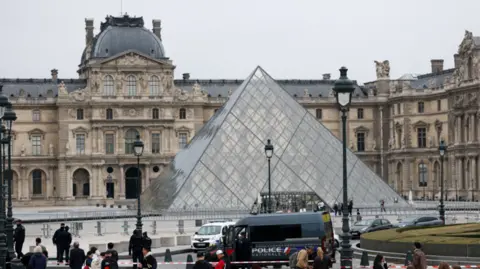
The Louvre museum in Paris has announced it is closing one of its galleries because of structural weaknesses.
The Campana Gallery - consisting of nine rooms which host Greek ceramics - will remain shut as engineers investigate certain beams supporting the floors, the Louvre said.
The announcement adds to the museum's unwelcome attention following a high-profile heist last month in which jewels worth €88m (£76m; $102m) were taken.
Criticism has focused on lax security at the world's most-visited museum in the French capital.
Four people have been arrested over the heist, but the jewels have not been recovered.
In a statement on Monday, the Louvre said that structural issues in offices on the second floor - above the Campana Gallery in the Sully wing of the museum - had led to its decision.
During these investigations, the Campana Gallery... will be closed to the public as a precautionary measure, it said.
Three weeks after the jewel theft, a report was released in which the Court of Auditors criticised managers who had preferred to invest in new artworks and exhibitions rather than basic upkeep and protection of the museum.
Basing its findings on the years 2018-24, the report found the museum had spent €105.4m (£92.7m) on buying new artworks and €63.5m on exhibition spaces.
But at the same time it spent only €26.7m on maintenance works, and €59.5m on restoration of the palace building.
Since the incident, security measures have been tightened around France's cultural institutions.
The Louvre has even transferred some of its most precious jewels to the Bank of France.