In brief
In September, a dusky female shark drifted into Busan’s North Port canal, capturing the public’s imagination. Marine biologist Kim Hyun‑woo and a Coast Guard crew mobilised a series of rescue attempts, ranging from electric deterrents to nets, all while the animal became a viral mascot dubbed ‘Bukangi’. Witnesses—from cheering crowds to disapproving protesters—renewed the debate over animal welfare during the high‑profile operation. The shark was finally guided back to the open sea on 2 October, though its injuries raise long‑term concerns.
In mid‑September, a dusky female shark drifting into Busan's North Port canal turned a quiet waterfront into a spectacle, drawing thousands of onlookers, a sudden citizen‑led mascot campaign and, finally, an international rescue operation that saw the apex predator step back into open waters on October 2.
Marine biologist Kim Hyun‑woo was called in after the coastguard spotted the animal in the concrete canal near the world's seventh busiest port. Since South Korea has dealt with sharks before, the unusual sighting—inside a shallow, human‑made channel—prompted an immediate rapid‑response team from the National Institute of Fisheries Science.
The first tactic was an electric deterrent, a weak current device normally used near beaches. After five hours the shark was too fast and large for the field, so the team switched to waiting, hoping she would voluntarily swim out.
Meanwhile, people began calling her ‘Bukangi’, a nickname derived from the nearby harbour name. The name grew into a local phenomenon: pins, plushies and t‑shirts were sold online, and a banner at the canal entrance urged the public to sign a petition demanding a new stadium in exchange for her safe return.
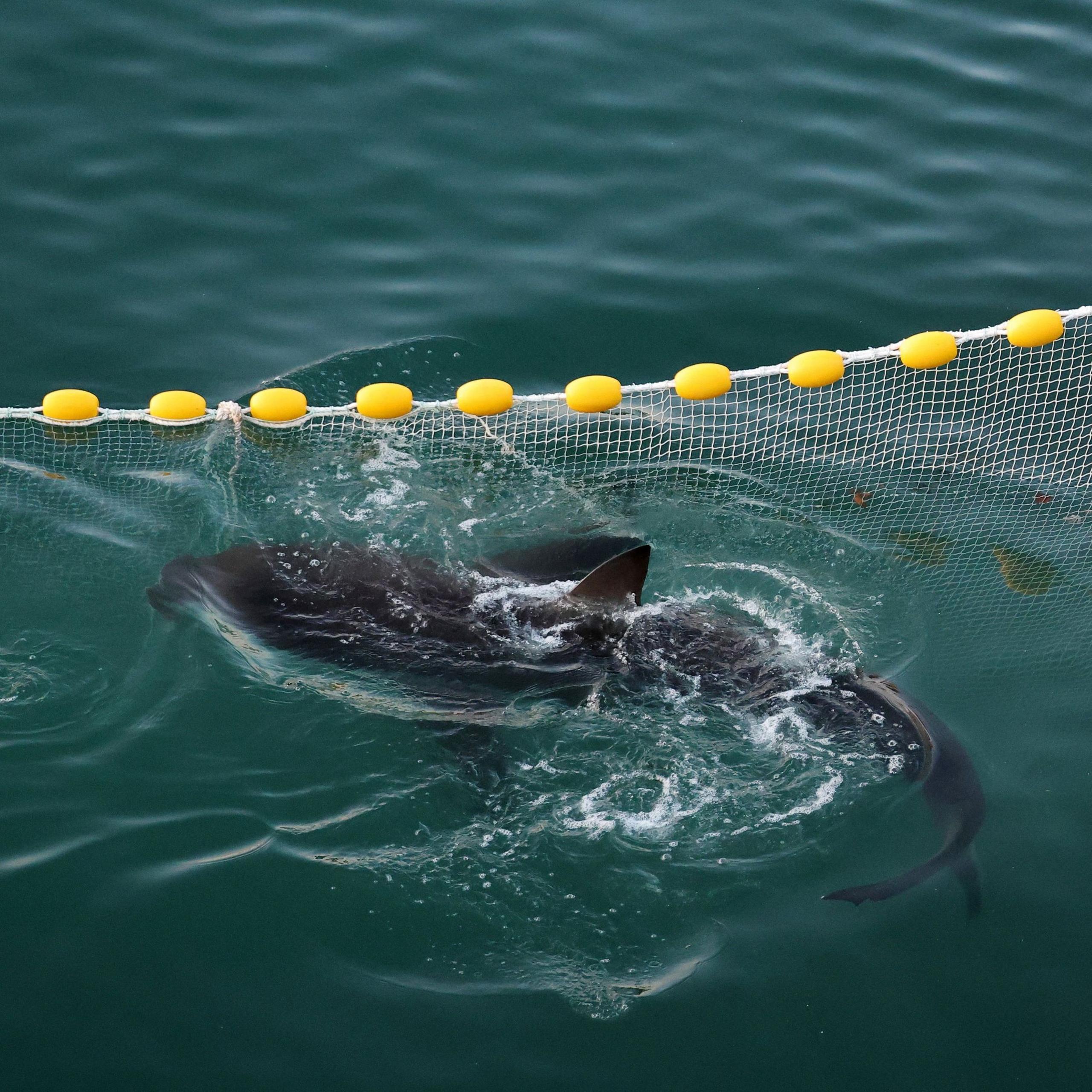
On 2 October, divers installed a net across the canal, only to see the shark swim around it and back inside within hours. A second layer of nets was then added, trapping her between the two. The following day the outer net was removed and Bukangi drifted further toward the sea, though she still circled back on occasion. By the end of the operation she had been successfully guided into open waters, and the authorities claimed the rescue was finished.
Investigators later noted she suffered abrasions on her snout from hitting the concrete walls; a marine biology professor warned her “critical” injuries could leave her vulnerable for months. The fact that no sightings have been confirmed for the last few days, however, is a positive sign that she may be adjusting to the wider, deeper waters.
The saga illustrates how a single animal can unite a city, inspire a brand, rally crowds, and spark debate about wildlife rescue ethics. Whether Bukangi will once again swim freely beneath Busan’s horizon remains an open story, but the city’s hope—and many visitors’ cheers—have already entered history.
Additional reporting by Leehyun Choi in Seoul