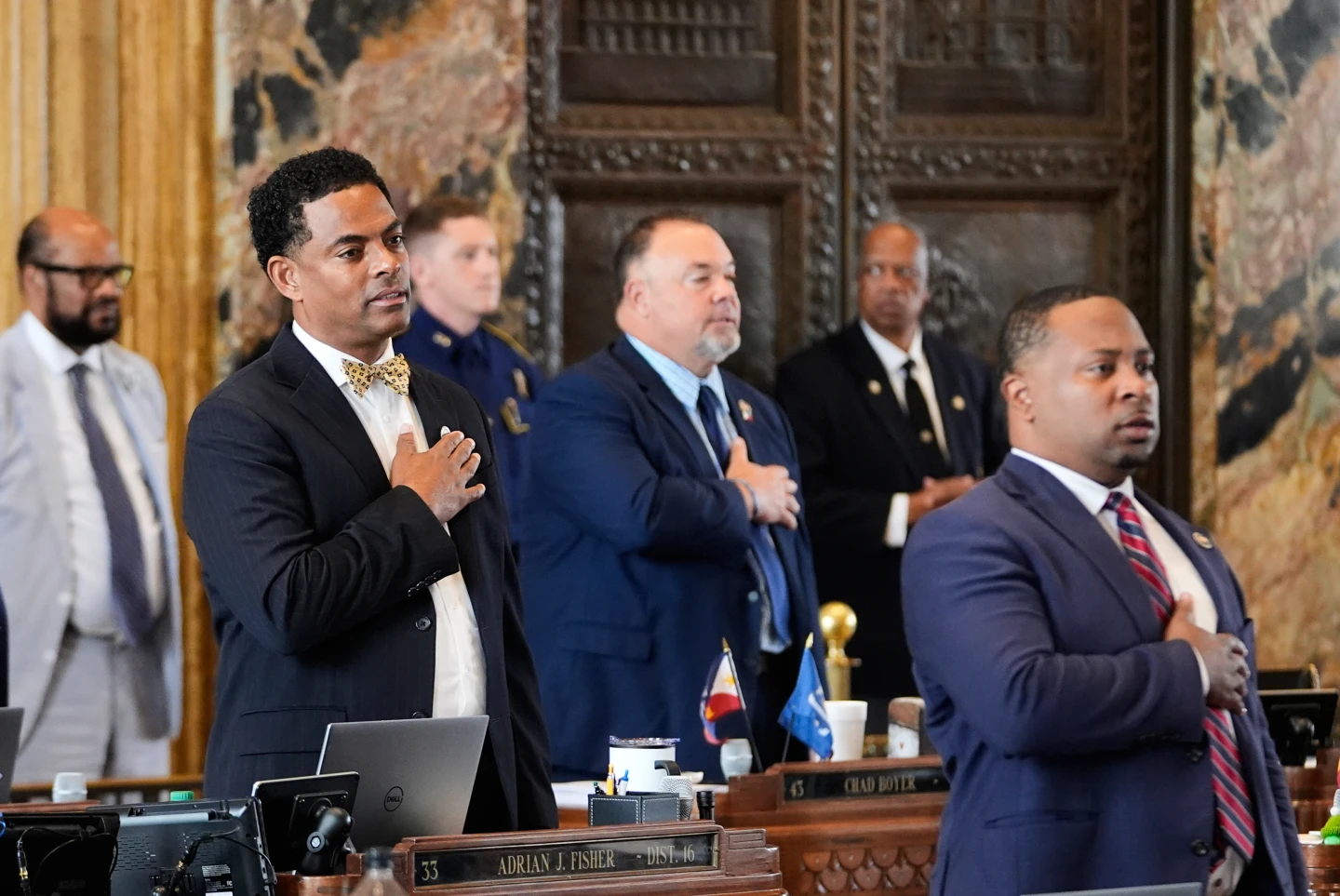
BATON ROUGE, La. — The Louisiana House of Representatives approved a new congressional map Friday that could finish the state’s two majority‑Black House districts, leaving only one room for Black voters and giving Republicans a better chance to pick up a sixth seat in the House of Representatives.
The map was approved a month after the Supreme Court struck down Louisiana’s court‑ordered 2024 map—created to comply with the Voting Rights Act—as an illegal racial gerrymander that weakens a landmark 1965 law that protects minority voters.
In the wake of that decision, a flurry of redistricting battles across the South has escalated. President Trump’s continued push to safeguard the GOP’s slim House majority has spurred Republican‑controlled states, from Florida to Alabama, to draft new district lines.
Rebuilding a congressional map that can near–guarantee a sweep in Louisiana required making a tough choice. The Republicans originally considered a 5‑1 map that would put all six seats in GOP hands, but that would have required adding more Black voters to Republican‑held districts—an action the GOP feared would backfire.
The House map gave the GOP a chance at a sixth seat by narrowing the majority‑Black district’s footprint and moving the Democratic‑held Rep. Cleo Fields’ district to surround predominantly white communities in Baton Rouge and southern Louisiana. It also added portions of Baton Rouge to the heavily Democratic, majority‑Black district based in New Orleans, currently represented by Rep. Troy Carter.
Gov. Jeff Landry, a Republican, is expected to sign the new map into law. The map is set to be used in the 2026 mid‑term elections unless further litigation forces a reversal.
The decision comes after Landry postponed the state’s U.S. House primary, originally scheduled for May 16. The pause was meant to give Republicans a window to draw and vote on the new map.
The map drew criticism from civil‑rights advocates and former campaign staffers. Democrats argue the district realignment still qualifies as a racial gerrymander by packing Black voters into one seat. Meanwhile, the plaintiffs that yesterday secured the Supreme Court’s ruling complained that the legislature’s new map leaves a majority‑Black district in place but now removes it from its original core.
Pennsylvania legislator Paul Leach, who has run for the seat in District 2, says the map will “mask a sitting U.S. Representative’s implications.” The new map was arranged “to make it look like the state was a model for the future” in the after‑shoot.
The redistricting wave is not limited to Louisiana. Florida’s legislature passed new congressional districts just hours after the Supreme Court decision, a move that could yield four more GOP seats. Tennessee adopted new House districts a week after the ruling, carving up a majority‑Black district in Memphis to gain an extra seat. In Alabama, Republicans are attempting to pick up another seat by redrawing two districts where Black residents comprise a majority.
All of these moves follow the same pattern: redrawing lines in ways that benefit GOP candidates while attempting to stay ahead of federal oversight. As the 2026 elections loom, lawmakers across the South keep armed a beat, aiming to hold on to or expand a fragile Republican advantage in the U.S. House.
The Louisiana House’s new map now faces scrutiny from courts, advocacy groups, and local communities who fear that an eroded concentration of Black voters could dilute their collective influence in future elections. Whether the map survives legal challenges remains to be seen, but its passage marks a significant shift in a state that historically had two such districts.
The next major hurdle will be the Senate’s approval of the map, to be voted on later this month. Governor Landry’s signature will complete the process, leaving lawmakers with a new congressional map in place a couple of weeks before the election cycle begins. The result could shape the balance of power in Washington for the next eight years.
The map was approved a month after the Supreme Court struck down Louisiana’s court‑ordered 2024 map—created to comply with the Voting Rights Act—as an illegal racial gerrymander that weakens a landmark 1965 law that protects minority voters.
In the wake of that decision, a flurry of redistricting battles across the South has escalated. President Trump’s continued push to safeguard the GOP’s slim House majority has spurred Republican‑controlled states, from Florida to Alabama, to draft new district lines.
Rebuilding a congressional map that can near–guarantee a sweep in Louisiana required making a tough choice. The Republicans originally considered a 5‑1 map that would put all six seats in GOP hands, but that would have required adding more Black voters to Republican‑held districts—an action the GOP feared would backfire.
The House map gave the GOP a chance at a sixth seat by narrowing the majority‑Black district’s footprint and moving the Democratic‑held Rep. Cleo Fields’ district to surround predominantly white communities in Baton Rouge and southern Louisiana. It also added portions of Baton Rouge to the heavily Democratic, majority‑Black district based in New Orleans, currently represented by Rep. Troy Carter.
Gov. Jeff Landry, a Republican, is expected to sign the new map into law. The map is set to be used in the 2026 mid‑term elections unless further litigation forces a reversal.
The decision comes after Landry postponed the state’s U.S. House primary, originally scheduled for May 16. The pause was meant to give Republicans a window to draw and vote on the new map.
The map drew criticism from civil‑rights advocates and former campaign staffers. Democrats argue the district realignment still qualifies as a racial gerrymander by packing Black voters into one seat. Meanwhile, the plaintiffs that yesterday secured the Supreme Court’s ruling complained that the legislature’s new map leaves a majority‑Black district in place but now removes it from its original core.
Pennsylvania legislator Paul Leach, who has run for the seat in District 2, says the map will “mask a sitting U.S. Representative’s implications.” The new map was arranged “to make it look like the state was a model for the future” in the after‑shoot.
The redistricting wave is not limited to Louisiana. Florida’s legislature passed new congressional districts just hours after the Supreme Court decision, a move that could yield four more GOP seats. Tennessee adopted new House districts a week after the ruling, carving up a majority‑Black district in Memphis to gain an extra seat. In Alabama, Republicans are attempting to pick up another seat by redrawing two districts where Black residents comprise a majority.
All of these moves follow the same pattern: redrawing lines in ways that benefit GOP candidates while attempting to stay ahead of federal oversight. As the 2026 elections loom, lawmakers across the South keep armed a beat, aiming to hold on to or expand a fragile Republican advantage in the U.S. House.
The Louisiana House’s new map now faces scrutiny from courts, advocacy groups, and local communities who fear that an eroded concentration of Black voters could dilute their collective influence in future elections. Whether the map survives legal challenges remains to be seen, but its passage marks a significant shift in a state that historically had two such districts.
The next major hurdle will be the Senate’s approval of the map, to be voted on later this month. Governor Landry’s signature will complete the process, leaving lawmakers with a new congressional map in place a couple of weeks before the election cycle begins. The result could shape the balance of power in Washington for the next eight years.