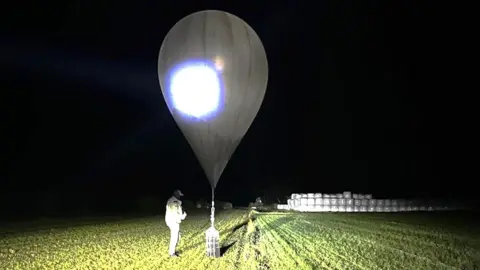
Whenever the wind blows northwest from Belarus, Lithuania braces for problems. That's when giant white balloons are launched across the border, crates of cheap cigarettes dangling beneath.
Over the past 10 weeks, this illicit balloon traffic has already forced Lithuania's main airport into shutdown 15 times, stranding or delaying thousands of travelers. On one occasion, the airspace was closed completely for 11 hours.
But the government here is sure it is dealing with something far more hostile than smugglers. It says the balloons have been weaponised in an act of hybrid warfare by Belarus, Russia's closest ally. This escalation occurs amid a wave of arson and sabotage attacks in Europe linked to Russian intelligence.
The Lithuanian government has declared an emergency situation. While balloons have been used by smugglers before, their numbers have surged suddenly this October. Foreign Minister Kestutis Budrys believes that these balloons are targeted attacks aimed at Lithuania's main airport, located just 30 kilometers from the border.
Military patrols have increased in the border zone, with teams checking vehicles for any involvement in smuggling, as the balloons fly too high for interception. A €1 million reward has been offered to any firm that can devise a method to neutralize these airborne threats.
The balloons appear to be aimed at not just smuggling but also political intimidation, with the Lithuanian government suspecting that Belarus seeks to pressure Europe into lifting sanctions and reducing the isolation of its regime.
As air travel in and out of Lithuania continues to adapt amidst these new threats, the future remains uncertain for travelers, with growing concerns about air travel safety and potential military responses.