ALBANY, N.Y. (AP) — President Donald Trump’s effort to install political loyalists as top federal prosecutors has run into a legal buzz saw lately, with judges ruling that his handpicked U.S. attorneys for New Jersey, eastern Virginia, Nevada, and Los Angeles were all serving unlawfully.
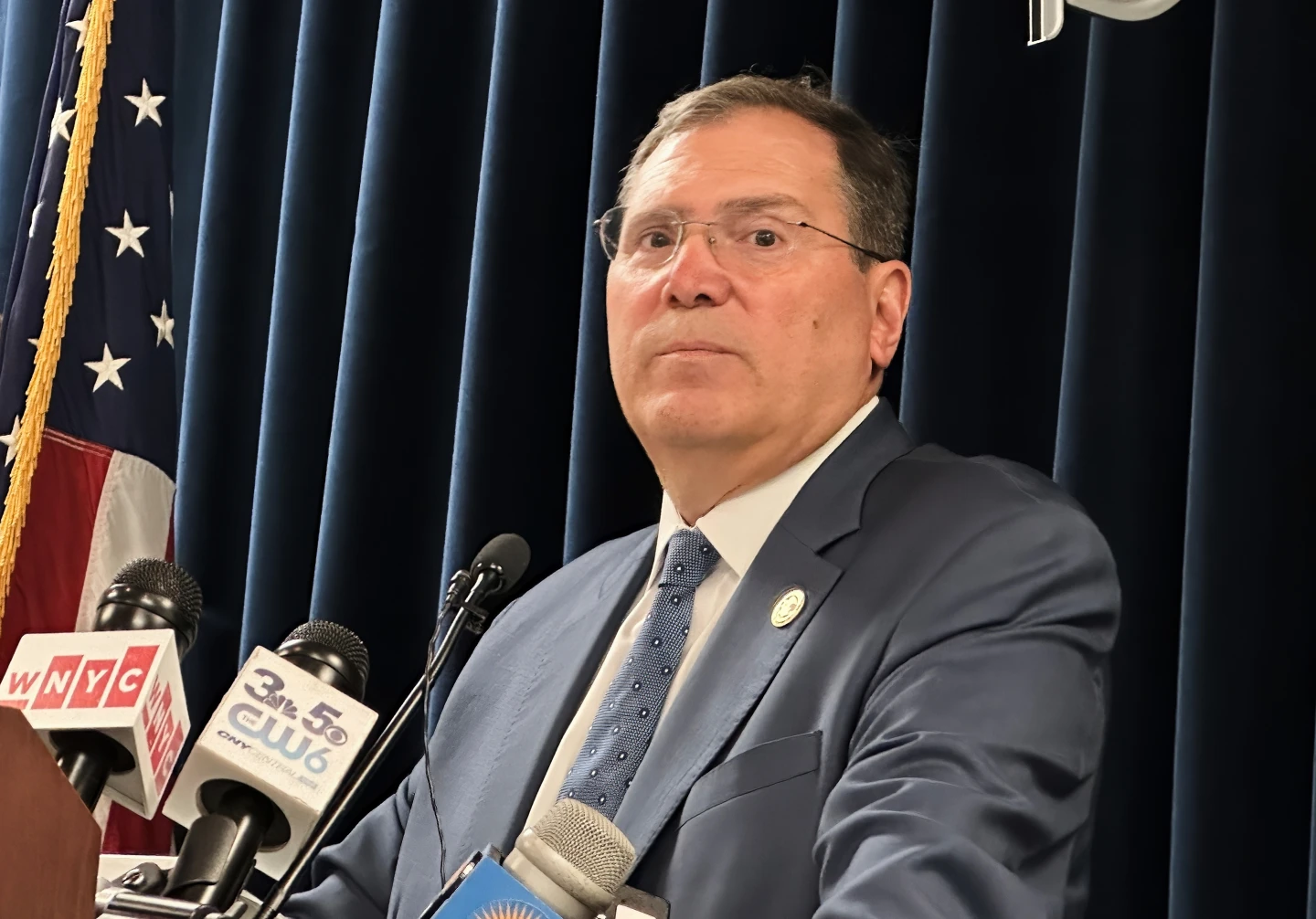
On Thursday, another federal judge heard an argument by New York Attorney General Letitia James that the administration also twisted the law to make John Sarcone the acting U.S. attorney for northern New York.
James, a Democrat, is challenging Sarcone’s authority to oversee a Justice Department investigation into regulatory lawsuits she filed against Trump and the National Rifle Association. It’s one of several arguments she is making to block subpoenas issued as part of the probe, which her lawyers claim is part of a campaign of baseless investigations and prosecutions of Trump’s perceived enemies.
Her attorney, Hailyn Chen, argued in court that since Sarcone lacks legitimate authority to act as U.S. attorney, legal steps taken by him in that capacity — like the subpoenas — are unlawful. In response to a question from U.S. District Judge Lorna G. Schofield, Chen said Sarcone should be disqualified from the investigation and the office.
Justice Department lawyers assert that Sarcone was appointed properly and that the motion to block the subpoenas should be denied. Assistant U.S. Attorney Richard Belliss contended that disqualifying Sarcone would be 'drastic and extreme.'
The hearing addresses the legality of unconventional methods the Trump administration has adopted to appoint prosecutors seen as unlikely to get confirmed by the U.S. Senate. A week prior, a federal judge in Virginia dismissed indictments against James and former FBI Director James Comey, determining that the interim U.S. attorney who initiated the charges was unlawfully appointed.
The Justice Department is expected to appeal the Virginia ruling and has also sought a new indictment in the case of James on mortgage fraud allegations, which the grand jury rejected.
In New York, the ongoing legal battle is significant as it reflects broader issues regarding the Trump administration's unconventional approach to U.S. attorney appointments and blurred lines between political loyalty and legal legitimacy.
On Thursday, another federal judge heard an argument by New York Attorney General Letitia James that the administration also twisted the law to make John Sarcone the acting U.S. attorney for northern New York.
James, a Democrat, is challenging Sarcone’s authority to oversee a Justice Department investigation into regulatory lawsuits she filed against Trump and the National Rifle Association. It’s one of several arguments she is making to block subpoenas issued as part of the probe, which her lawyers claim is part of a campaign of baseless investigations and prosecutions of Trump’s perceived enemies.
Her attorney, Hailyn Chen, argued in court that since Sarcone lacks legitimate authority to act as U.S. attorney, legal steps taken by him in that capacity — like the subpoenas — are unlawful. In response to a question from U.S. District Judge Lorna G. Schofield, Chen said Sarcone should be disqualified from the investigation and the office.
Justice Department lawyers assert that Sarcone was appointed properly and that the motion to block the subpoenas should be denied. Assistant U.S. Attorney Richard Belliss contended that disqualifying Sarcone would be 'drastic and extreme.'
The hearing addresses the legality of unconventional methods the Trump administration has adopted to appoint prosecutors seen as unlikely to get confirmed by the U.S. Senate. A week prior, a federal judge in Virginia dismissed indictments against James and former FBI Director James Comey, determining that the interim U.S. attorney who initiated the charges was unlawfully appointed.
The Justice Department is expected to appeal the Virginia ruling and has also sought a new indictment in the case of James on mortgage fraud allegations, which the grand jury rejected.
In New York, the ongoing legal battle is significant as it reflects broader issues regarding the Trump administration's unconventional approach to U.S. attorney appointments and blurred lines between political loyalty and legal legitimacy.