In brief
Researchers stumbled upon a massive coral in the Solomon Islands which has thrived for over 300 years, raising hopes for coral conservation amid climate change challenges.
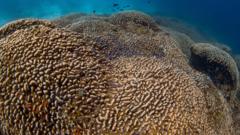
The largest coral ever recorded has emerged in the southwest Pacific Ocean, astonishing scientists and locals alike. This colossal organism, measuring an impressive 34 meters wide, is believed to be over 300 years old, surpassing even the size of a blue whale. The discovery was made by videographer Manu San Felix, who was aboard a National Geographic ship exploring remote Pacific locales to assess their vulnerability to climate change.San Felix recounts his unexpected finding while diving near a supposed shipwreck. After spotting the coral, he called his son, Inigo, for a closer look. The sight of the vast coral structure was a deeply emotional experience for him, likening it to an "underwater cathedral." Reflecting on the coral's long existence, he mused, "Wow, this was here when Napoleon was alive."Utilizing a specialized underwater tape measure, scientists documented the coral to confirm its dimensions: 34 meters in width, 32 meters in length, and 5.5 meters in height. Globally, corals face severe threats due to rising ocean temperatures associated with climate change. These intricate organisms, comprised of thousands of tiny polyps working in unison, are essential for sustaining sprawling reefs that serve as habitats for diverse marine life.Despite the challenges, scientists reported that this newly discovered coral appears to be in good health, thriving in deeper waters that may have shielded it from the harsher conditions impacting shallower reefs. News of the coral's discovery coincided with the UN's climate talks at COP29 in Baku, Azerbaijan, where global discussions on climate action were underway.Trevor Manemahaga, the climate minister for the Solomon Islands, shared his pride in the find, emphasizing the importance of protecting such unique marine resources. He acknowledged the urgent need for international assistance in combating climate change's effects on vulnerable island nations, as increasing cyclones and coastal erosion threaten livelihoods dependent on marine ecosystems.With nearly 50-70% of the Solomon Islands’ export revenues sourced from logging—which poses severe risks to coral health through water pollution—Manemahaga highlighted the critical need for diversified employment opportunities that wouldn’t harm coral reefs. Amid increasing climate threats, coral scientist Eric Brown, who participated in the research expedition, expressed hope from discovering this thriving coral habitat, stating it offers encouragement amid deteriorating conditions of nearby shallow reefs. This particular coral species, known as Pavona clavus, serves as an important habitat for various marine species, from shrimp to fish, and is seen as a significant indicator for studying historical oceanic conditions.Unfortunately, a recent report revealed that 44% of corals in warm waters are now at risk of extinction, highlighting a worrying trend since the last assessment in 2008. As discussions surrounding climate change and coral conservation continue, the future of ecosystems reliant on these remarkable coral formations remains increasingly uncertain.